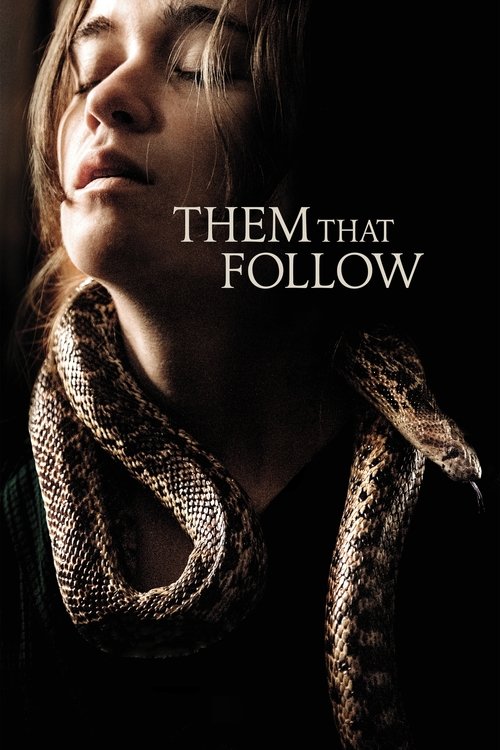
Them That Follow
2019
No user ratings available yet
Representation score: 4.5 out of 10

Representation Score
Limited
2022
Director
Chandler Balli
Runtime
107 minutes
Average Rating
No ratings yetNew Showbiz Analysis
The film opens on a static, sun-drenched suburban neighborhood, where manicured lawns and identical houses establish a sterile perfection that feels less like safety and more like a cage. This visual quiet is the film’s first argument: that the modern American ideal of community is a facade for control. As Luke, a man fresh out of recovery, is drawn into a local church by his friend Mark, the camera lingers on the banality of the setting. The horror is not in monstrous cultists, but in the normalcy of their interactions, the synchronized movements, and the gentle, soft-spoken manipulation of Dr. Andrews, who is framed in "holy" light that makes his control appear angelic. The sold meaning is a critique of modern loneliness. The film suggests that the desire for belonging is so potent that it makes individuals susceptible to subtle ideological capture. The white picket fence, shown from multiple angles, becomes a coded symbol for the boundary between the "safe" inside and the "dangerous" outside, reinforcing the theme of confinement. The camera loves the group’s rituals, framing them as intimate and bonding, which makes the eventual rejection of the ideology feel like a necessary but painful severance. The ending is a moral verdict on isolation. The survivors, including Luke and Paul, stand in the ruins of their social world, looking out at an open road. The film rewards their sanity with freedom, but punishes them with the loss of their entire community. Dr. Andrews, the manipulator, never pays a physical price; he simply exits the narrative, leaving the survivors to deal with the aftermath. This asymmetry underscores the film’s central tension: that escaping a cult is not a victory, but a costly survival. The last image, of Luke holding car keys as he drives away, symbolizes the return to individual agency, but it is a lonely, exhausted freedom. The film argues that in a society that offers no real connection, the only true freedom is the freedom to be alone.
Category Breakdown
No queer characters or same-sex intimacy appear. The cast remains strictly heterosexual, with no identity-based conflict or romantic deviation from conventional pairings.
Luke is the anxious male lead, while Paul serves as the questioning female anchor. Men are shown as vulnerable to the group’s structure, but male authority is not framed as the primary threat.
The cast is predominantly white, mirroring the suburban setting. Beyza Nur Apaydin appears as B, offering minor ethnic diversity, but her role lacks specific cultural definition or racial conflict.
The film critiques the suburban American Dream and hollow community. The white picket fence acts as a visual metaphor for confinement, framing the church group as a symptom of societal loneliness.
No physical, mental, or cognitive disabilities are depicted. The narrative focuses on psychological manipulation and social conformity, with no impaired bodies or neurodivergent traits present on screen.
Present on Screen
Limited or Absent
Official Synopsis
Fresh out of recovery from a personal crisis, Luke is ready for his new chance at a happy life. Though happiness is going to have to wait when Luke's close friend Mark begins singing the praises for a charismatic pastor of a church in town.
2019
2019

2019
2023
2014
2023

2016

2011
No reviews yet. Be the first to share your thoughts on this movie!
Use the rating form above to leave a star rating and optional review.