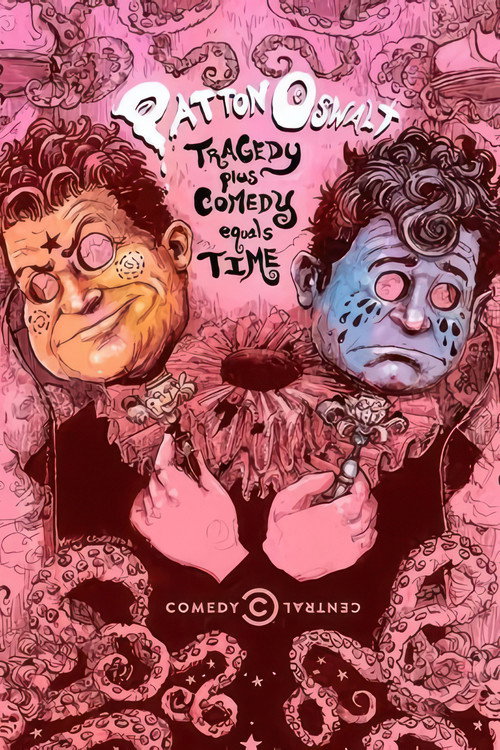
Patton Oswalt: Tragedy Plus Comedy Equals Time
2014
No user ratings available yet
Representation score: 6.3 out of 10
Representation Score
Fair
2011
NRDirector
Beth McCarthy-Miller
Runtime
58 minutes
Average Rating
No ratings yetNew Showbiz Analysis
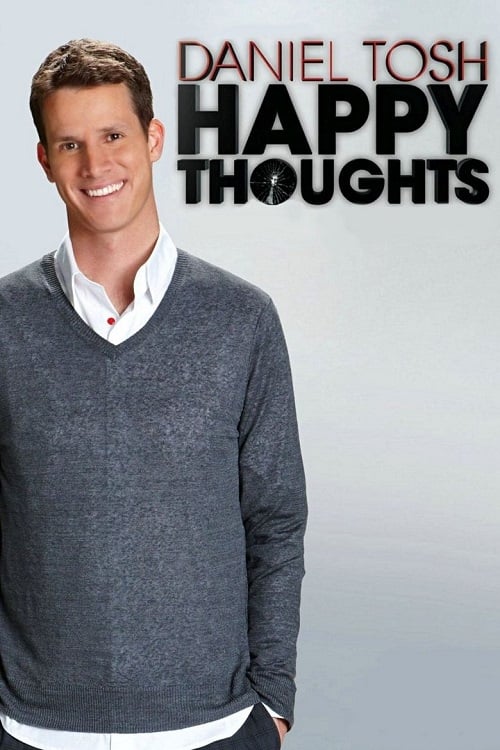
Daniel Tosh: Happy Thoughts is a transgressive comedy special that prioritizes the disruption of social decorum over the inclusion of diverse identities. The performance relies on a singular, non-diverse viewpoint to challenge social norms through irony and shock value. While the special achieves moderate success in cultural representation by critiquing institutional authority and religious hierarchies, it fails to provide meaningful influence to underrepresented groups. The comedic structure focuses on the friction between identities and social norms rather than substantive representation. Ultimately, the work lacks the multi-layered depth required for a higher diversity rating. It functions as a monocultural exercise that uses identity-based topics as fodder for observational humor rather than as a platform for diverse voices.
Category Breakdown
The performance uses LGBTQ+ topics primarily for provocative humor. The material often relies on clichés designed for shock value rather than offering nuanced or celebratory depictions of identity.
Gender dynamics are deconstructed through an irreverent lens that mocks traditional roles. However, the solo stand-up format limits substantive gender subversion due to a lack of diverse female influence.
The special functions as a monocultural performance centered on a single viewpoint. While racial topics may be addressed, there is no evidence of intentional blending of different backgrounds or diverse structural influence.
The work excels in cultural critique by treating religious and political institutions with skepticism. It uses moral relativism and irony to disrupt conventional expectations of polite social discussion.
Themes of neurodivergence or physical mannerisms are occasionally used as comedic punchlines. The representation remains limited to the 'outsider' cliché without providing genuine influence to individuals with disabilities.
Present on Screen
Limited or Absent
Official Synopsis
Daniel Tosh performs in front of a live San Francisco audience in this stand-up special for Comedy Central, and touches on topics ranging from sports and pop culture, to religion and politics.
2014
2017
1996
2007

2014
2012

2010
2018
No reviews yet. Be the first to share your thoughts on this movie!
Use the rating form above to leave a star rating and optional review.