
The Kingdom of Diamonds
1980
No user ratings available yet
Representation score: 6.6 out of 10
Representation Score
Fair
1969
Director
Satyajit Ray
Runtime
129 minutes
Average Rating
No ratings yetNew Showbiz Analysis
Satyajit Ray’s fantasy classic excels in its cultural specificity, presenting a world deeply rooted in Bengali folk traditions. By utilizing an entirely Indian cast, the film asserts a localized identity that resists Western cinematic dominance. However, the film remains tied to the social hierarchies of its time, with a heavy focus on male characters and traditional gender roles where women occupy secondary positions. Ultimately, the film explores how social outcasts can disrupt established power structures. While it lacks modern representation for LGBTQ+ or disabled individuals, its authentic ethnic storytelling is a significant strength.
Category Breakdown
The film adheres to a traditional folkloric framework without featuring LGBTQ+ characters or non-straight relationships.
The narrative focuses on male protagonists, Goopy and Bagha, while female characters like the Queen play supporting roles within traditional gender hierarchies.
The film showcases high cultural authenticity with an entirely Indian cast, grounding its fantasy in Bengali folk traditions and avoiding Western-centric casting.
The story challenges rigid social standings by elevating underrepresented musicians and using supernatural elements to prioritize folklore over organized religion.
There is no explicit depiction of physical or neurodivergent disabilities. However, the protagonists face social 'otherness' due to their perceived lack of musical skill.
Present on Screen
Limited or Absent
Official Synopsis
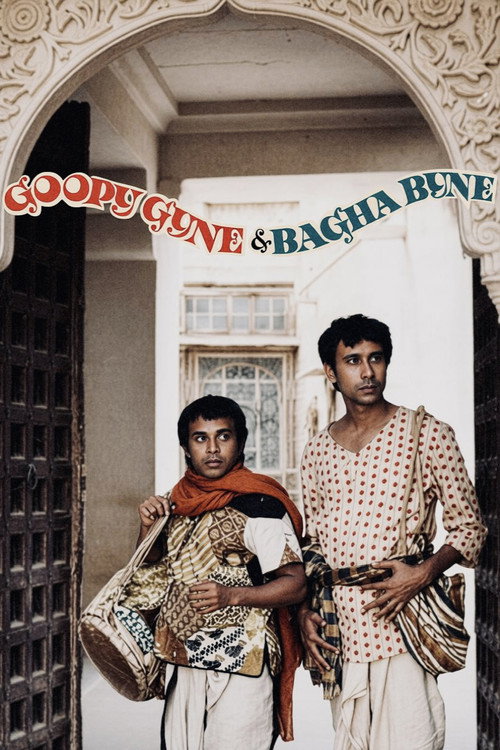
Goopy Gyne and Bagha Byne are banished from their respective villages for being bad musicians. However, with their skills, they succeed in pleasing the king of ghosts who grants them three boons. How will they succeed in preventing the war between Halla and Shundi which is looming large?
1980
1968
1958
1970
1970
1968
1961
1971
No reviews yet. Be the first to share your thoughts on this movie!
Use the rating form above to leave a star rating and optional review.