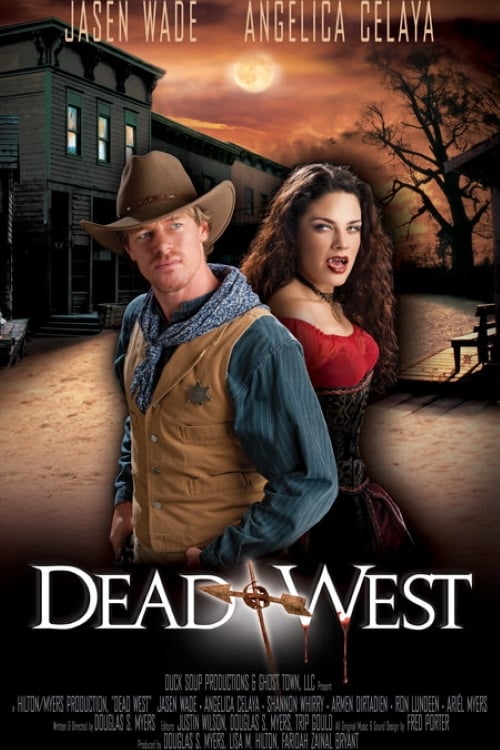
Dead West
2010
No user ratings available yet
Diversity score: 2.9 out of 10

1975
RDirector
Terry Bourke
Runtime
118 minutes
Average Rating
No ratings yetSynopsis
A sheriff investigates why the guests at a local hostelry check in, but never check out.
Overall Score
Limited
Category Breakdown
LGBTQ+ Representation
The film lacks any evidence of non-cisnormative gender identities. It operates within standard horror-western archetypes that historically offer little to no queer visibility.
Gender Representation
The narrative centers on a male sheriff, reinforcing traditional masculine authority. Female characters appear to occupy roles of peril rather than subverting established gender hierarchies.
Racial & Ethnic Diversity
The film reflects the homogeneous social structures typical of mid-70s Westerns. There is no evidence of a diverse or non-Anglo-Saxon majority cast.
Religious & Cultural Diversity
The story utilizes traditional Western settings and institutions of law and order. It follows a conventional moral framework without challenging established social structures.
Disability Representation
There is no information regarding the inclusion of characters with visible or invisible disabilities.
Strengths
Areas for Improvement
AI Analysis
Inn of the Damned is a genre-driven production that adheres strictly to the established tropes of 1970s horror and Western cinema. The film functions as a standard mystery, prioritizing genre conventions over narrative subversion or intersectional storytelling. The representation is heavily skewed toward traditional hierarchies. Masculine authority is central to the plot, while racial and LGBTQ+ visibility is virtually non-existent, reflecting the era's homogeneous casting patterns and lack of queer narratives. Ultimately, the film serves as a period-typical piece of exploitation cinema. It reinforces existing social structures rather than attempting to disrupt or critique them through its characterizations or setting.
No reviews yet. Be the first to share your thoughts on this movie!
Use the rating form above to leave a star rating and optional review.