Chapters
2012
No user ratings available yet
Diversity score: 4.6 out of 10
2020
Director
Suhasini Maniratnam, Sudha Kongara Prasad, Rajiv Menon, Gautham Vasudev Menon, Karthik Subbaraj
Runtime
129 minutes
Average Rating
No ratings yetSynopsis
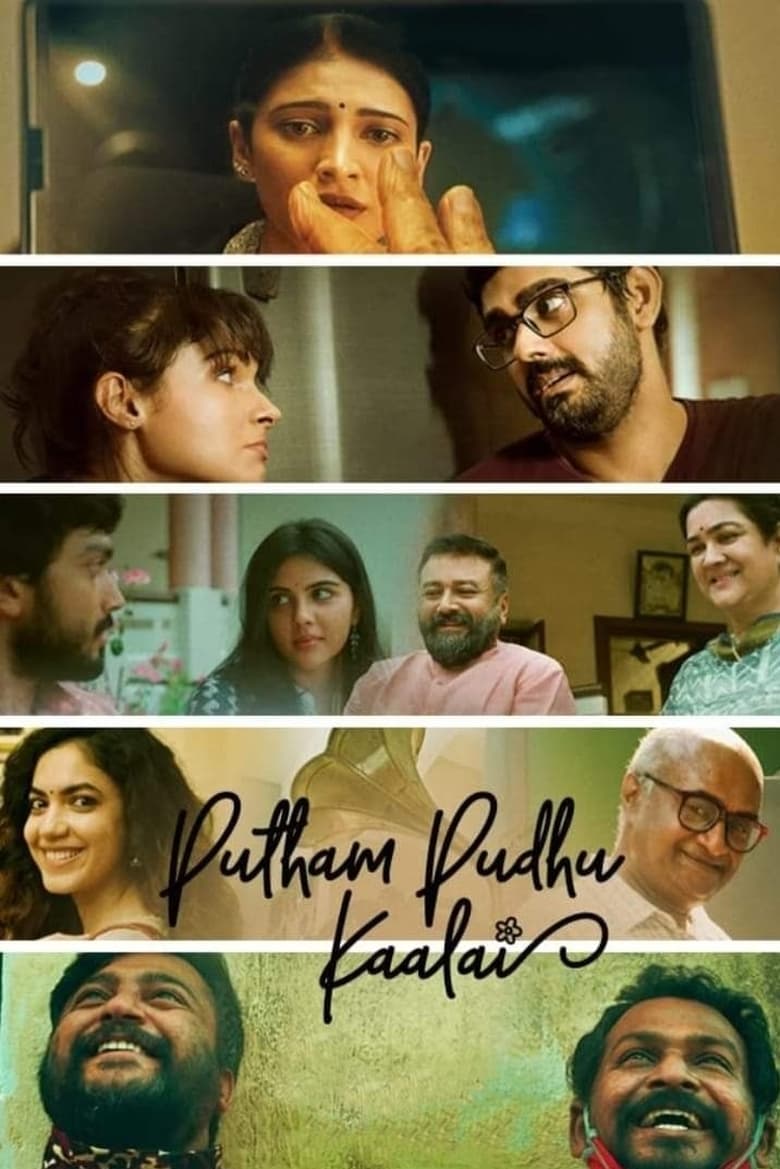
Putham Pudhu Kaalai brings together 5 of the most celebrated directors in Tamil cinema - Sudha Kongara, Gautham Menon, Suhasini Mani Ratman, Rajiv Menon, and Karthik Subbaraj to create Amazon Prime Video's first Indian anthology film.
Overall Score
Fair
Category Breakdown
LGBTQ+ Representation
The anthology focuses primarily on traditional interpersonal and familial dynamics. While the format allows for diverse perspectives, explicit LGBTQ+ narratives are not central to the core plot summaries.
Gender Representation
Female directors like Sudha Kongara and Suhasini Maniratnam influence the lens, prioritizing female agency. Women often serve as primary drivers of their sub-plots rather than passive observers.
Racial & Ethnic Diversity
The film centers South Asian identities and regional linguistic specificities. It disrupts Western-centric norms by prioritizing local authenticity and cultural context in its casting and settings.
Religious & Cultural Diversity
The stories navigate the tension between traditional family structures and evolving individualistic values. The film explores the nuances of contemporary social shifts and subjective morality.
Disability Representation
There is limited evidence of intentional representation regarding physical or neurodivergent disabilities. The narrative focus remains centered on interpersonal and familial drama.
Strengths
Areas for Improvement
AI Analysis
Putham Pudhu Kaalai succeeds as a culturally specific showcase of Tamil cinema, leveraging a diverse directorial team to move away from monolithic storytelling. The anthology format provides a multi-perspective approach that highlights regional authenticity and challenges Western-centric cinematic norms. However, the film's impact is uneven across intersectional categories. While the presence of female directors strengthens gendered perspectives and agency, the narrative remains largely tethered to traditional familial structures. This focus limits the exploration of non-heteronormative identities and disability. Ultimately, the film is a strong representation of South Asian identity and modern Indian life, though it lacks broad-spectrum inclusion for marginalized groups outside of its primary cultural and gendered focuses.
2012
2017
2005

2017
2011
2015
2009
2018
2005
2020
2008

2025
No reviews yet. Be the first to share your thoughts on this movie!
Use the rating form above to leave a star rating and optional review.