Steakhouse
2021
No user ratings available yet
Representation score: 3.7 out of 10
Representation Score
Fair
1982
Director
Priit Pärn
Runtime
15 minutes
Average Rating
No ratings yetNew Showbiz Analysis
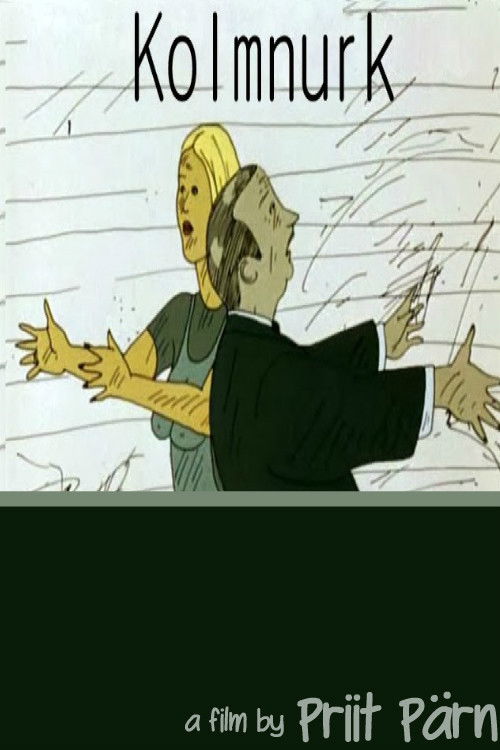
The Triangle is a surrealist film that focuses on existential absurdity rather than demographic representation. It primarily serves as a critique of social structures and domestic stability, rather than a study of individual identity. The film's avant-garde style leads to a lack of specific racial, ethnic, or LGBTQ+ identifiers, focusing instead on symbolic functions. However, it provides a sophisticated critique of established Western social structures through an absurdist lens.
Category Breakdown
The film does not include explicit LGBTQ+ characters or narratives. Its surrealist nature allows for various interpretations of identity, but there is no clear depiction of queer relationships or non-traditional gender identities.
The film disrupts traditional gender roles by destabilizing the relationship between Julia and Viktor. Eduard's intrusion into their routine rituals challenges the expected stability of their household.
The film does not feature specific racial or ethnic characters due to its abstract, dream-like sequences. Characters are represented symbolically rather than through specific ethnic backgrounds.
The film effectively critiques Western social structures by presenting domestic routines as ritualistic cycles. Through an absurdist lens, it questions the stability of established institutions.
There is no clear portrayal of physical or neurodivergent disabilities in the film. The surrealist approach makes it challenging to apply traditional disability metrics to the characters.
Present on Screen
Limited or Absent
Official Synopsis
Julia spends every night preparing a multi-course feast for her husband Viktor. Until one day Eduard appears from under the electric stove and starts demanding his share of the meal.
2021
1984
1976

1984
1976
1988
2015
1989
No reviews yet. Be the first to share your thoughts on this movie!
Use the rating form above to leave a star rating and optional review.