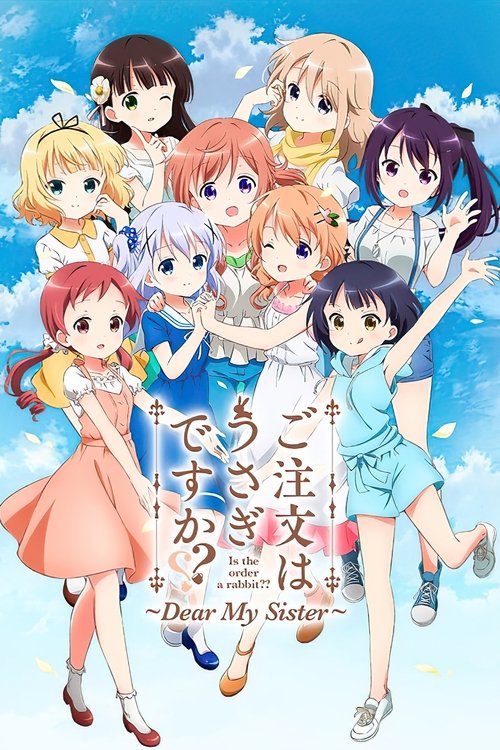
Is the Order a Rabbit?? Dear My Sister
2017
No user ratings available yet
Representation score: 5.0 out of 10
Representation Score
Fair
2016
Director
Motoki Tanaka
Runtime
50 minutes
Average Rating
No ratings yetNew Showbiz Analysis
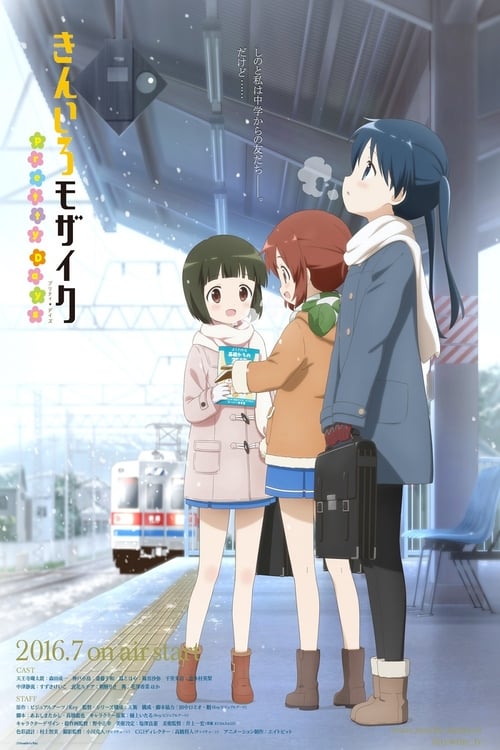
Kinmoza! Pretty Days is a slice-of-life film that focuses on the everyday lives of students in a homogenous group. The narrative emphasizes the cohesion and dynamics within a close-knit peer group. While the film excels at depicting the nuances of interpersonal relationships, it falls short in addressing broader socio-political themes or multi-layered issues. The story adheres to a traditional genre framework that prioritizes social harmony over the disruption of established norms. Ultimately, the film’s low diversity score reflects its intent to offer comfort through familiar settings rather than challenging viewers with diverse representations or critical examinations of cultural norms.
Category Breakdown
The film highlights intense female friendships and uses moe aesthetic elements. However, it does not explicitly depict LGBTQ+ identities or challenge the assumption that everyone is straight or cisgender.
The film features an all-female cast that emphasizes female relationships within a school setting. However, the characters adhere to traditional gender roles without questioning these norms.
The cast is predominantly Japanese, with limited representation of diverse racial or ethnic backgrounds. The story focuses on a culturally specific context without addressing broader multi-layered issues.
The film presents a traditional social structure that emphasizes stability and conformity within a localized school environment. It avoids confronting religious or cultural differences.
The film does not include any characters with visible or invisible disabilities. The cast is portrayed as neurotypical and able-bodied, with no exploration of neurodiversity or physical impairments.
Present on Screen
Limited or Absent
Official Synopsis
One of the best parts about being in a group of friends is that you usually have a couple of guardian angels watching over you. So, when Shinobu has to both write a script as well as make costumes for a play for the school festival, it doesn't take long for her classmates to realize that someone might have bitten off more than she can chew. Or write and sew, in this case. Fortunately for Shinobu's theatrical future, Alice, Yoko, and Aya are glad to pitch in, and that allows for a chance to reflect on their experiences in the days before Alice arrived. Will everything be finished in time, or will the audience be in stitches because of the ones coming apart onstage? There's no way to be sure until the last curtain call!
2017
2022
2019
2014

2021
2020

2016

2019
No reviews yet. Be the first to share your thoughts on this movie!
Use the rating form above to leave a star rating and optional review.