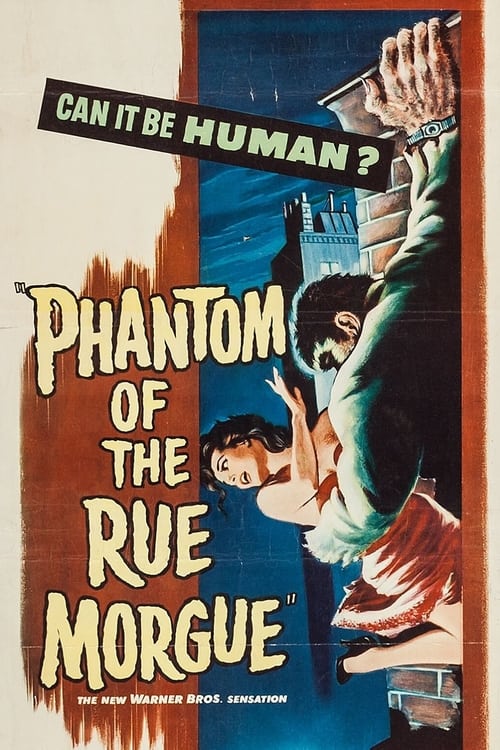
Phantom of the Rue Morgue
1954
No user ratings available yet
Diversity score: 1.9 out of 10
1954
ApprovedDirector
John Brahm
Runtime
72 minutes
Average Rating
No ratings yetSynopsis
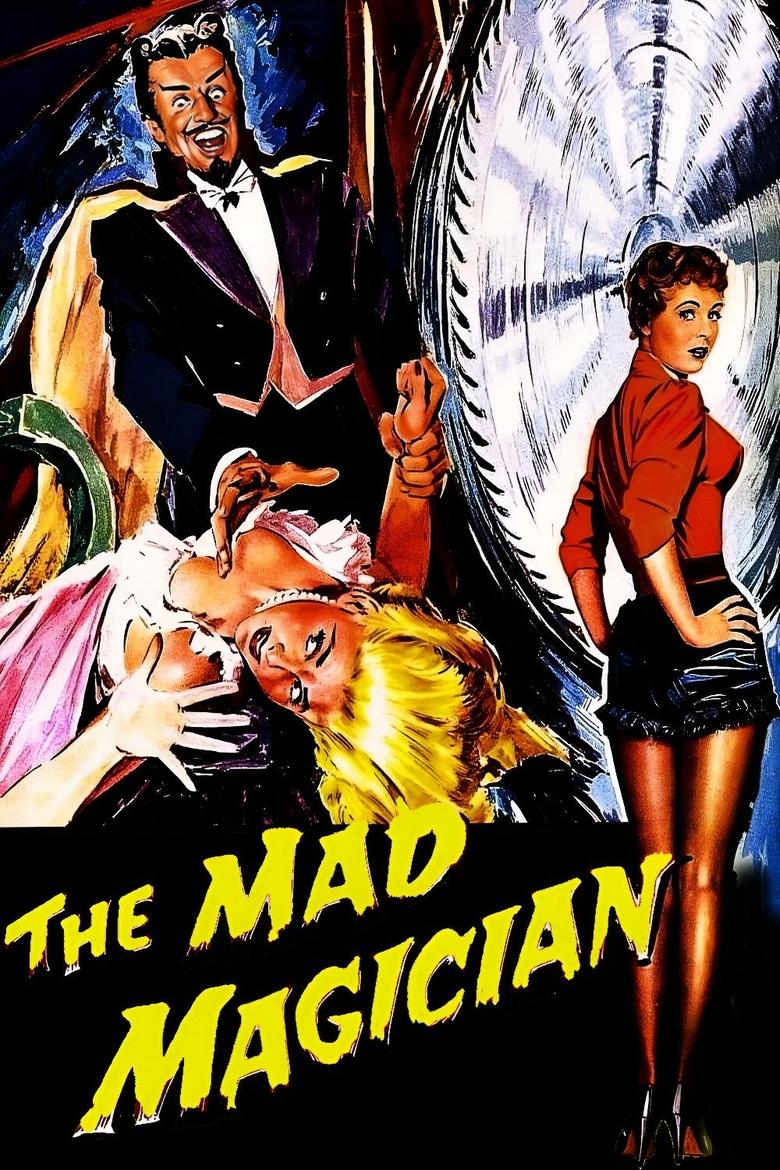
Don Gallico is an inventor of stage magic effects who aspires to become a star in his own right. Just before his first performance his act is shut down by capricious manager Ross Ormond who wants Gallico's brilliant buzz saw effect for the act of The Great Rinaldi, an established star. With this defeat, and the humiliation of having already lost his wife Claire to Ormond, Gallico decides it is time to take matters into his own hands.
Overall Score
Minimal
Category Breakdown
LGBTQ+ Representation
The film lacks any presence of queer subtext or non-cisnormative identities. Interpersonal dynamics are strictly heteronormative, focusing on the male protagonist's obsession with the female lead.
Gender Representation
The narrative reinforces mid-century hierarchies where the male protagonist drives the action. Female characters are positioned as subjects of manipulation, reflecting conventional tropes of male dominance and female vulnerability.
Racial & Ethnic Diversity
The cast and setting appear largely homogeneous, reflecting standard 1950s Hollywood casting. There is no evidence of racial blending or diverse characters driving the narrative.
Religious & Cultural Diversity
The story operates within a conventional moral framework typical of its era. It focuses on individual pathology rather than offering any critique of systemic institutions or social orders.
Disability Representation
Mental instability serves as a plot driver for the thriller genre rather than a nuanced exploration of neurodivergence. No characters with disabilities are portrayed with agency.
Strengths
Areas for Improvement
AI Analysis
The film is a period-specific psychological thriller that adheres strictly to mid-century cinematic conventions. It functions through established genre tropes that reinforce traditional social hierarchies rather than disrupting them. Representation is minimal across all categories. The narrative focuses on individual psychological descent, which avoids broader social or intersectional critiques. The lack of diverse casting and the reliance on heteronormative structures result in a very low diversity profile. Ultimately, the work reflects the standard Hollywood practices of 1954, prioritizing genre-driven tension over meaningful representation of varied identities or systemic perspectives.
No reviews yet. Be the first to share your thoughts on this movie!
Use the rating form above to leave a star rating and optional review.