
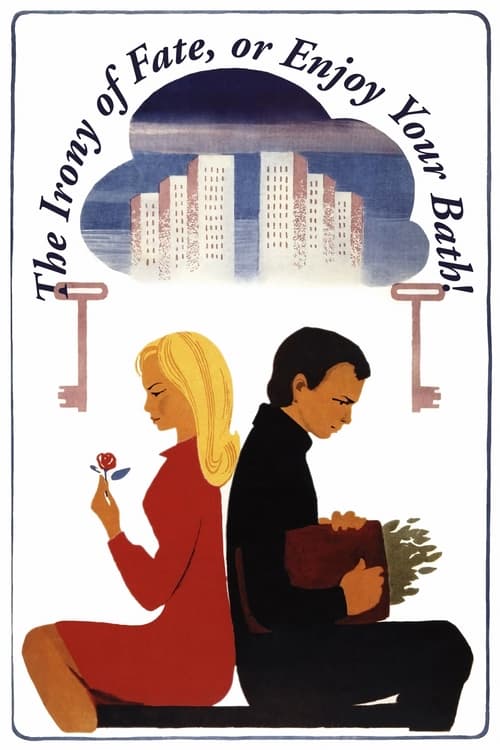
I Married Who?
2012
No user ratings available yet
Representation score: 2.9 out of 10
Representation Score
Limited
1976
TV-GDirector
Eldar Ryazanov
Runtime
192 minutes
Average Rating
No ratings yetNew Showbiz Analysis
The film is a lyrical comedy that prioritizes human connection and individual control over systemic critique. It succeeds in humanizing the individual against a backdrop of highly regulated, standardized Soviet society. By highlighting the absurdity of identical urban architecture, it subtly challenges the uniformity of the era. However, the work remains limited by the social and demographic constraints of its historical context. It lacks intentional multi-layered representation and does not actively challenge traditional gender roles. Ultimately, the film functions as a study of personal, subjective truths emerging from the cracks of an institutionalized society, even while remaining within a conventional romantic framework.
Category Breakdown
The film operates within a strictly straight-centered framework, focusing entirely on the accidental romantic entanglement between a man and a woman.
Nadya demonstrates emotional intelligence and a significant role in driving the story when navigating the unexpected intrusion. However, the narrative ultimately centers on a traditional romantic resolution.
The setting depicts a highly homogeneous urban Soviet environment. The casting reflects the specific demographic realities of Moscow and Leningrad during this era.
The story offers a nuanced critique of standardized Soviet life. It uses identical architecture to deconstruct the uniformity of a state-planned environment.
There are no visible or invisible disabilities portrayed within the primary cast or central character arcs.
Present on Screen
Limited or Absent
Official Synopsis
A group of old friends have a tradition of going to a public bathing house on New Year's Eve. Occasionally too much vodka and beer makes two of them unconscious. The problem is that one of them (Sasha) has to go to Leningrad but another one (Zhenya) goes. Zhenya wakes up at Leningrad airport. Believing that he is still in Moscow he takes a taxi and goes home. The street name, building and even apartment number, the way an apartment complex looks the same and the key coincide completely - just typical Soviet-type 'economy' architecture. Imagine the surprise of Nadya when she enters her apartment and finds a man without trousers in her bed. What's more - Nadya's fiancé also finds him there...
2012
1985

1983
1965
1958
1972
1988
1998
No reviews yet. Be the first to share your thoughts on this movie!
Use the rating form above to leave a star rating and optional review.