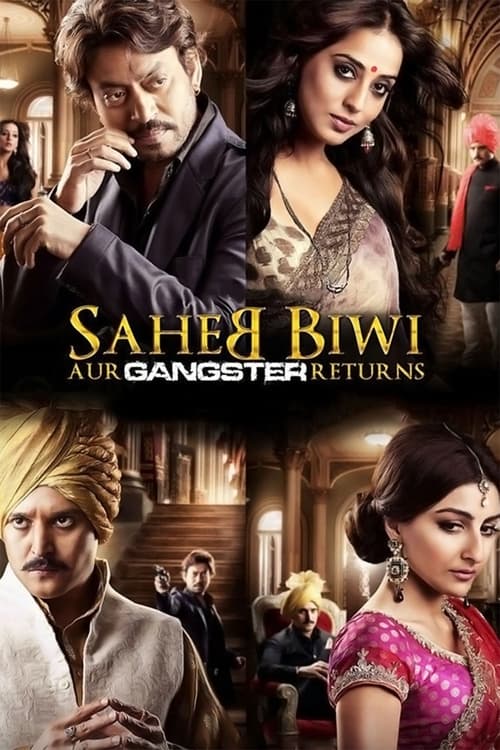
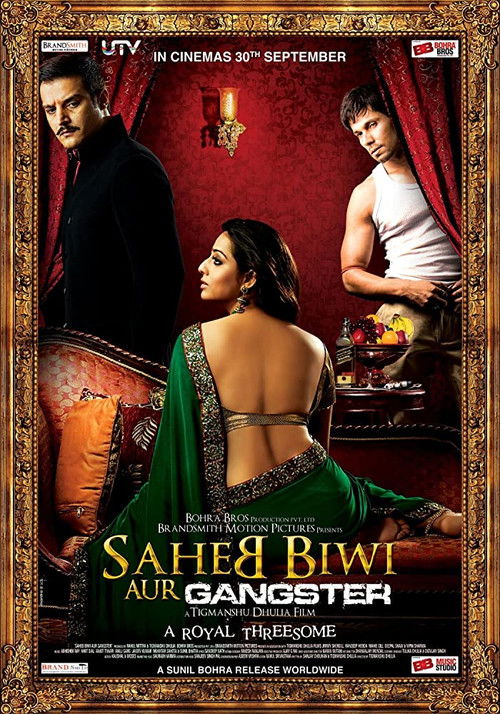
Saheb Biwi Aur Gangster Returns
2013
No user ratings available yet
Representation score: 7.2 out of 10
Representation Score
Good
2011
Director
Tigmanshu Dhulia
Runtime
119 minutes
Average Rating
No ratings yetNew Showbiz Analysis
The film stands out by presenting women as central, driving forces within a corrupt political system. It avoids moral absolutes, focusing instead on the complexities of situational ethics and systemic decay. However, the narrative's scope is limited by its focus on a specific regional socio-economic context. The lack of LGBTQ+ representation and the use of disability solely as a plot device prevent a broader impact. Overall, it is a sophisticated study of power that emphasizes regional authenticity and complex character development.
Category Breakdown
The film adheres to traditional assumptions about straight relationships and gender. There is no depiction of same-sex relationships or non-binary identities.
Women are shown as powerful figures who shape the story within a corrupt political system. Chhoti Rani, in particular, plays a key role in manipulating power structures.
The story focuses on the local identities and socio-political dynamics in Uttar Pradesh, rather than broader ethnic diversity.
The narrative challenges traditional institutions and the 'strongman' culture. It presents a morally ambiguous landscape where crime and political necessity are closely linked.
Physical injuries are used mainly as a plot device to introduce new characters. The film does not explore disability as a central identity.
Present on Screen
Limited or Absent
Official Synopsis
After the death of his first wife, wealthy Raja Aditya Pratap Singh, re-marries another woman, simply known as Chhoti Rani, who subsequently becomes mentally unstable. His father's former mistress, Badi Rani, controls the wealth, while he himself has a mistress. Unable to procure contracts through Mantri Prabhu Tiwari, he decides to stand for elections, while his rival, Ghenda Singh, recruits an assassin, Babalu, who is also the nephew of Sunder, Chhoti Rani's chauffeur, to kill Aditya. After Sunder is unable to drive due to an injury, he recommends Babalu, and Aditya hires him. Babalu settles down in his new job, attempts to get accepted by everyone, including Chhoti Rani, who he finds attractive. He soon finds out that she, too, has feelings for him, and then starts making plans of not only carrying out his assigned task but also becoming the next Saheb.
2013

2012
2018

2009
2004

2004
2007

2007
No reviews yet. Be the first to share your thoughts on this movie!
Use the rating form above to leave a star rating and optional review.