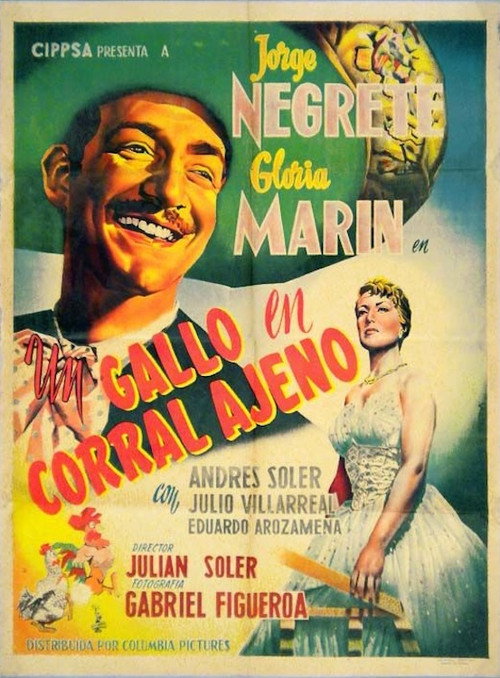
The Straying Rooster
1952
No user ratings available yet
Representation score: 1.4 out of 10
Representation Score
Minimal
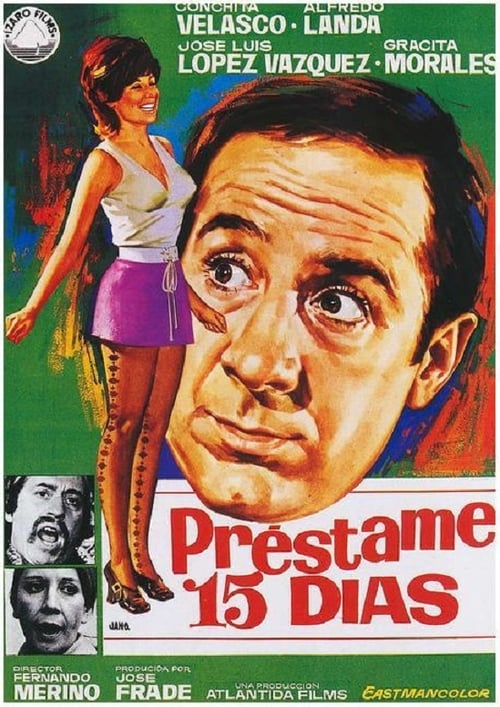
1971
Director
Fernando Merino
Runtime
0 minutes
Average Rating
No ratings yetNew Showbiz Analysis
Préstame quince días is a product of the late Francoist era in Spain, characterized by strict censorship and social constraints. The film adheres to traditional social hierarchies and reinforces established norms. It relies on conventional demographic norms and upholds the nuclear family structure, resulting in limited visibility for diverse identities and roles. Ultimately, the film reflects the social cohesion and patriarchal authority of its time, without significant disruption to the status quo.
Category Breakdown
The film does not include any representation of LGBTQ+ identities or same-sex relationships. It portrays traditional family structures typical of 1971 Spanish cinema.
The film depicts traditional gender roles where women do not have significant influence over the plot. These roles align with the conventional gender norms of the era.
The film reflects the homogeneous demographics of the region during its time. It does not feature a racially diverse cast or blend of ethnicities.
The film emphasizes domestic stability and traditional social units. It upholds the societal norms of its time without challenging established cultural institutions.
The film does not include any characters with visible or invisible disabilities.
Present on Screen
Limited or Absent
1952

1971
1971
2019

2010
1981
1955

2023
No reviews yet. Be the first to share your thoughts on this movie!
Use the rating form above to leave a star rating and optional review.