D.I.Y. Duck
2024
No user ratings available yet
Representation score: 1.8 out of 10
Representation Score
Minimal
2026
Director
Matthew Nastuk, Timothy Bailey
Runtime
48 minutes
Average Rating
No ratings yetNew Showbiz Analysis
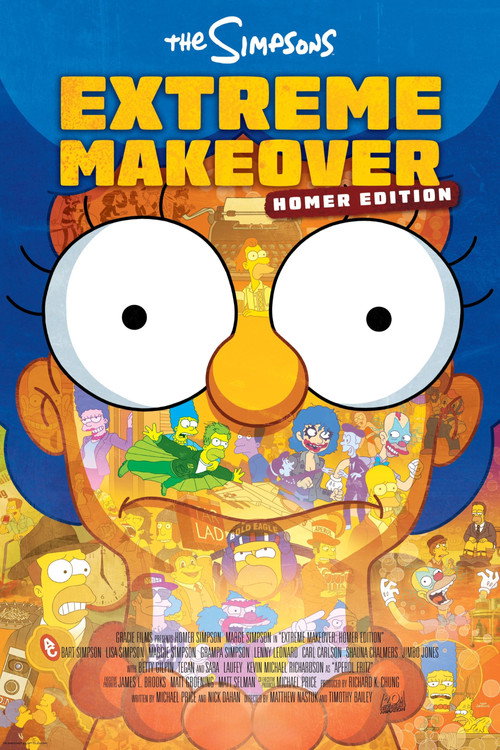
The special uses Marge’s imagination to explore marital dissatisfaction, but its vision of change stays within familiar boundaries. It centers white, heterosexual characters and reinforces traditional gender expectations, even as it questions them. Marge’s fantasies give her narrative control, yet they do not challenge the status quo in lasting ways. The lack of diversity in casting and representation limits its appeal to viewers seeking broader perspectives. Strengths include Marge’s perspective driving the narrative structure and fantasies allowing for visual experimentation and character exploration. Areas for improvement include no meaningful racial or LGBTQ+ representation and gender roles remaining conventional despite Marge’s central role.
Category Breakdown
No LGBTQ+ characters or same-sex relationships appear. All romantic and sexual content centers on heterosexual pairings, including Marge’s fantasies about Homer and Helen’s affair with Kirk.
Marge drives the plot through her fantasies, but each vision reinforces traditional gender roles. She imagines herself as a supportive wife, an artist inspiring a husband, or a wingwoman, while men remain the primary decision-makers.
The cast is almost entirely white, reflecting the show’s long-standing lack of racial diversity. No characters of color hold significant roles or appear in the fantasies.
The episode critiques suburban marriage and consumer culture but does so through nostalgia and fantasy rather than systemic critique. Traditional institutions like family and work are questioned yet ultimately upheld as aspirational.
No characters with physical or mental disabilities appear. The psychological evaluation in one fantasy is a plot device, not a portrayal of disability.
Present on Screen
Limited or Absent
Official Synopsis
Homer and Marge's fun couples' date night goes off the rails when Marge learns Homer left the kids unsupervised with only the doorbell camera as a babysitter. Frustrated with her imperfect husband, a tipsy Marge stirs up a trilogy of fantasies of a different Homer.
2024
2009
1994

2019

2010

2009
2011

2007
No reviews yet. Be the first to share your thoughts on this movie!
Use the rating form above to leave a star rating and optional review.