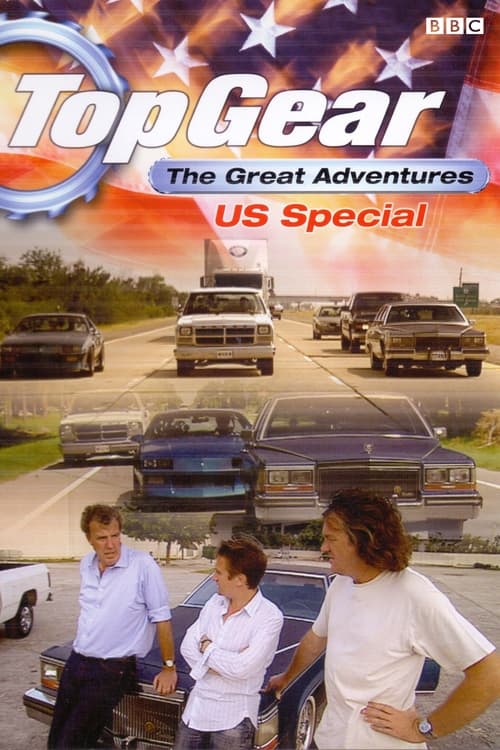
Top Gear: US Special
2007
No user ratings available yet
Representation score: 1.1 out of 10
Representation Score
Minimal
2010
TV-PGDirector
Brian Klein, Owen Trevor, Phil Churchward
Runtime
61 minutes
Average Rating
No ratings yetNew Showbiz Analysis
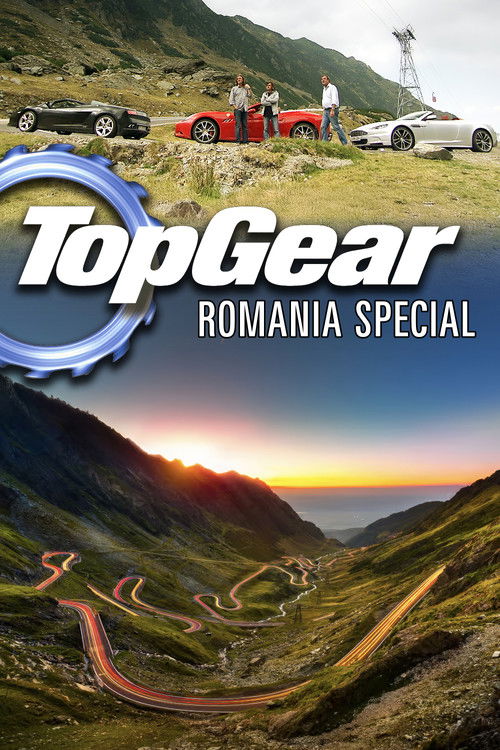
The film opens with an aerial shot of the Carpathian Mountains, a rugged landscape that immediately positions itself as a hostile environment for the three British men and their expensive cars. This setup sells a narrative of Western superiority, where the hosts’ wealth and technical knowledge are the only tools capable of conquering the "wild" terrain. The camera lingers on Clarkson’s face during moments of triumph, framing his aggression as charisma, while May’s confusion is treated as a source of humor. The sold meaning is clear: the outsider is the hero who tames the wild, but the "wild" is merely a difficult test of his ego. The film’s argument is that Western masculinity is superior to the environment, but only if it is disciplined. The hosts’ frustration with the road is framed as a moral judgment on the infrastructure, not a practical one. The local mechanics and helpers are treated as "magical helpers" who fix the cars or provide directions, then exit the scene. Their expertise is not credited; it is treated as a service to the British heroes. The ending rewards endurance and mechanical survival over aesthetic perfection, with the trio standing in a line, exhausted and covered in mud, as the credits roll. The last image is where the film’s values settle: the hosts are rewarded for their ability to endure discomfort and make the fewest mistakes, while the local culture is left as a backdrop. The film’s internal logic pulls apart when it treats the local poverty as a "challenge" for the British men, rather than a social reality. The "adventure" is actually a test of who can endure the most discomfort and make the fewest mistakes, with the "winner" being the one who remains in control, not the one who has the most fun.
Category Breakdown
The narrative remains strictly heteronormative, focusing entirely on male camaraderie and mechanical competition. No queer characters, relationships, or identities appear on screen or in the dialogue.
The cast consists exclusively of three men, with women appearing only as background extras. The dynamic reinforces traditional masculine hierarchies, framing Clarkson’s aggression as competence while May’s passivity serves as the recurring punchline.
On-screen action is dominated by three white British men, while Romanian locals appear as background scenery or brief, functional helpers. Local culture is treated as a backdrop for the hosts’ adventure, with poverty serving as obstacles to be overcome by Western technology.
The film frames Romania as a "wild" frontier requiring taming by British automotive expertise. Western wealth is presented as the default standard of merit, with the hosts’ expensive cars serving as the primary measure of value and control.
No characters with disabilities are depicted, and the narrative contains no references to physical or cognitive impairment. The focus remains entirely on mechanical performance and the physical endurance of the able-bodied hosts.
Present on Screen
Limited or Absent
Official Synopsis
Jeremy Clarkson, Richard Hammond and James May take an Aston DBS Volante, a Ferrari California and a Lamborghini Gallardo Spyder to Romania in search of an obscure stretch of tarmac that some hardcore drivers claim is nothing less than the greatest road in the world.
2007
2014
2010
2012
2006
2010
2007
2011
No reviews yet. Be the first to share your thoughts on this movie!
Use the rating form above to leave a star rating and optional review.