Find another title
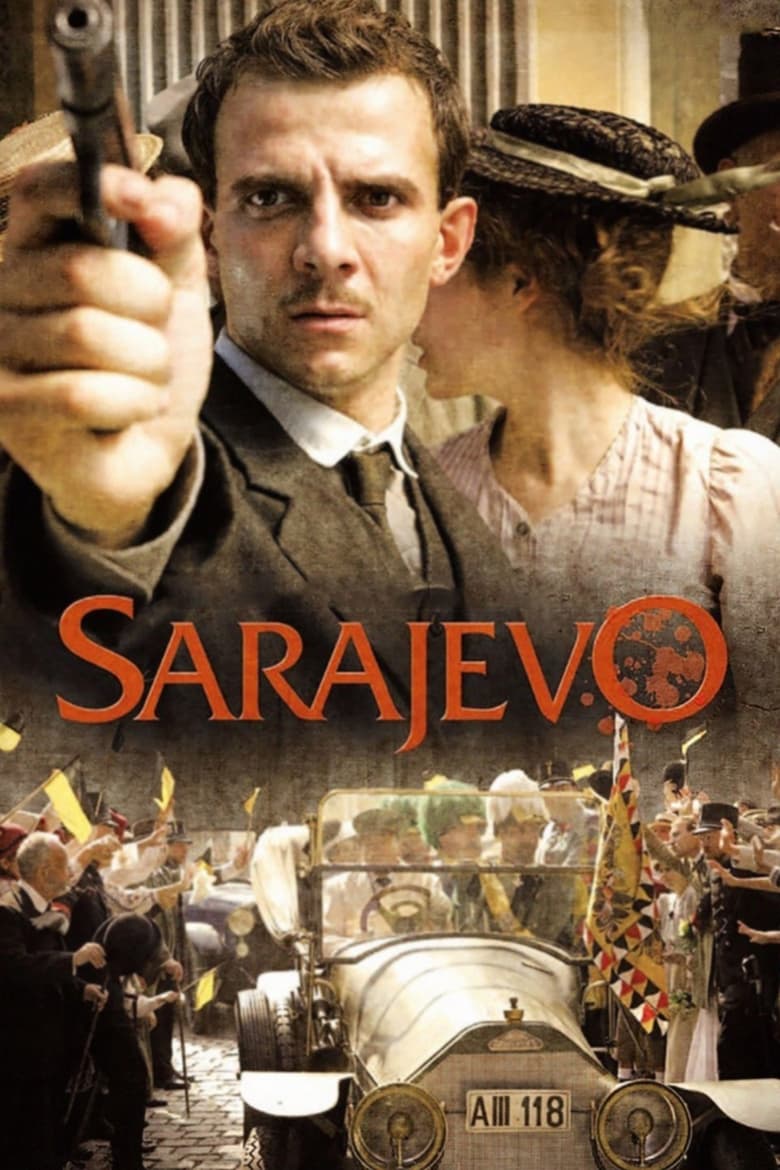
Sarajevo
2014
Director
Andreas Prochaska
Runtime
98 minutes
Average Rating
No ratings yetSynopsis
The events in Sarajevo in June 1914 are the backdrop for a thriller directed by Andreas Prochaska and written by Martin Ambrosch, focusing on the examining magistrate Dr. Leo Pfeffer (Florian Teichtmeister) investigating the assassination of Archduke Franz Ferdinand. Trying to do his job in a time of lawlessness and violence, intrigues and betrayal, Leo struggles to maintain his integrity and save his love, Marija, and her father, prominent Serbian merchant. But the events of Sarajevo have set into motion an inescapable course of events that will escalate to become … the Great War.
Where to Watch
Diversity & Representation
Overall Score
Fair
Category Breakdown
LGBTQ+ Representation
The film focuses on geopolitical tensions and the protagonist's legal struggles. There is no visible presence of non-cisnormative identities or same-sex intimacy within the central plot.
Gender Representation
The narrative centers on the professional agency of Dr. Leo Pfeffer. While emotional stakes involve his relationship with Marija, female characters are positioned as essential to his moral survival.
Racial & Ethnic Diversity
The cast reflects the complex ethnic tapestry of the Austro-Hungarian Balkan territories. It highlights Serbian, Jewish, and Slavic identities navigating a collapsing imperial structure.
Religious & Cultural Diversity
The film critiques rigid nationalist and imperialist frameworks by emphasizing the failure of traditional institutions. It portrays the impending Great War as a systemic collapse of political order.
Disability Representation
There is no prominent focus on neurodivergence or physical disabilities. Characters are defined by their socio-political roles and ethnic identities rather than physical or cognitive abilities.
Strengths
- Provides a nuanced portrayal of the complex ethnic tapestry in the Balkans.
- Disrupts traditional historical heroism by focusing on systemic institutional failures.
- Highlights the agency of non-Anglo-Saxon characters within a collapsing empire.
Areas for Improvement
- Lacks visible representation of LGBTQ+ identities or same-sex intimacy.
- Provides no prominent focus on neurodivergence or physical disabilities.
- Relies on traditional gender roles for emotional stakes.
AI Analysis
The film succeeds in providing a nuanced, multi-ethnic view of the Balkans by centering on the intersection of Serbian, Jewish, and Slavic identities. This disrupts a homogeneous Western lens and offers a sophisticated look at ethnic agency during imperial decay. However, the production lacks representation for LGBTQ+ individuals and people with disabilities. The narrative remains strictly bound to the social constraints and historical realism of 1914, which limits the visibility of these identities. Ultimately, the film's strength lies in its deconstruction of 'great man' history, focusing instead on systemic failures and the precariousness of individual morality within a diverse, high-stakes environment.
Rate this Movie
Reviews
No reviews yet. Be the first to share your thoughts on this movie!
Use the rating form above to leave a star rating and optional review.