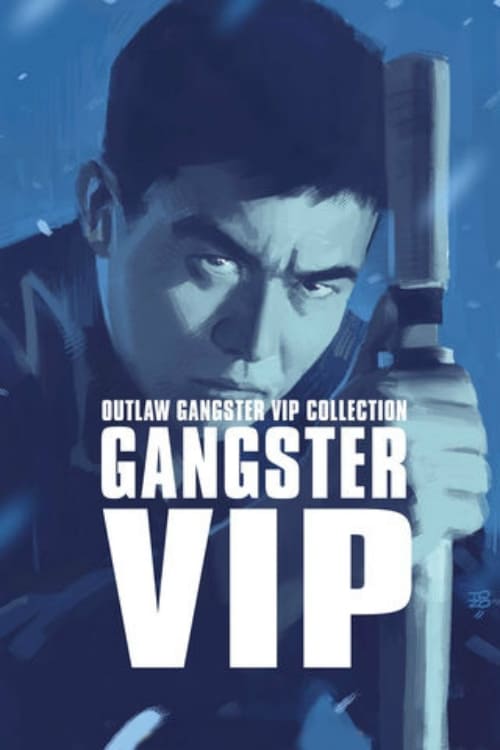
Outlaw: Gangster VIP
1968
No user ratings available yet
Diversity score: 3.8 out of 10

1993
RDirector
Frank A. Cappello
Runtime
96 minutes
Average Rating
No ratings yetSynopsis
When Nick Davis leaves prison after one year in solitairy, he is hired to operate a forklift in a warehouse in the harbor owned by the Japanese Yakuza patriarch Isshin Tendo. The place is assaulted by the Italian Mafia lead by Dino Campanela and Nick rescues and saves the life of Shuji Sawamoto, who is the representative of Yakuza interests in America. Shuji hires Nick to work for Yakuza and becomes his godfather in the family after his oath to join Yakuza. However, Nick is a lonely FBI undercover agent assigned to penetrate the criminal organization. When the FBI discovers that Campanela is organizing a massive attack to destroy the Yakuza, Nick's boss Littman calls off the operation to leave the dirty work to the Italian Mafia. But the connection of Nick with Shuji and his goddaughter Yuko forces him to help his Japanese family.
Overall Score
Fair
Category Breakdown
LGBTQ+ Representation
The film operates within a traditional heteronormative framework typical of early 1990s action cinema. There is no discernible presence of LGBTQ+ characters or non-cisnormative identities.
Gender Representation
The narrative is driven almost exclusively by male-centric combat and criminal leadership. Female characters like Yuko function primarily as emotional anchors rather than independent drivers of the plot.
Racial & Ethnic Diversity
The film disrupts standard Hollywood hierarchies by centering an African American lead within a Japanese Yakuza structure. This casting provides a unique cross-cultural intersection for the era.
Religious & Cultural Diversity
The story explores friction between Yakuza and Italian Mafia structures, decentering Western social dominance. It focuses on internal codes of honor rather than explicit political or systemic critiques.
Disability Representation
There is no evidence of visible or invisible disabilities being utilized as central plot devices or character traits within the narrative.
Strengths
Areas for Improvement
AI Analysis
American Yakuza stands out for its unconventional racial casting, placing a Black protagonist at the center of an Asian criminal underworld. This intersectional approach challenges the white-centric crime narratives common in the early 1990s. However, the film remains tethered to traditional genre tropes. It relies heavily on masculine archetypes of violence and leadership, offering little subversion of gendered power dynamics or social hierarchies. While the clash of international crime syndicates provides cultural depth, the film lacks engagement with broader identity-based critiques or diverse social representations.
1968
1968
1968
1972
No reviews yet. Be the first to share your thoughts on this movie!
Use the rating form above to leave a star rating and optional review.