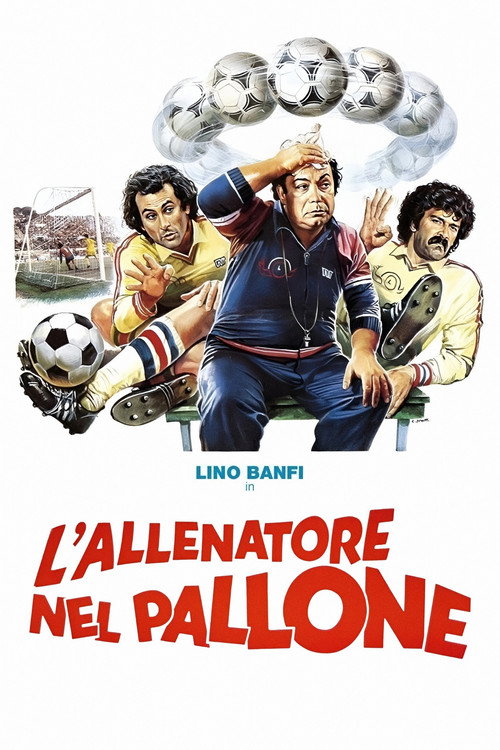
L'allenatore nel pallone
1984
No user ratings available yet
Representation score: 3.2 out of 10
Representation Score
Minimal
1970
Director
Luigi Filippo D'Amico
Runtime
116 minutes
Average Rating
No ratings yetNew Showbiz Analysis
This 1970 comedy functions as a character study of class and community within a traditional Italian framework. It adheres to the established social norms of the *commedia all'italiana* genre rather than attempting to deconstruct existing hierarchies. The film reinforces conventional social structures through its focus on a male-centric sporting environment and a homogeneous local population. It lacks the complexity needed to represent diverse identities or underrepresented groups. Ultimately, the work serves as a period-specific piece that reflects the demographic constraints and social norms of its era.
Category Breakdown
The film follows the typical social norms of 1970s Italian comedy. It focuses on traditional social structures and a male-dominated sporting environment without any representation of LGBTQ+ individuals.
The story centers around a male protagonist and a community of male football enthusiasts. It lacks strong female roles or presence needed to challenge traditional gender roles.
Set in a localized Italian context, the cast reflects a homogeneous social environment. There is no indication of diverse racial or ethnic representation within this period piece.
The story is rooted in traditional Western institutions, featuring a devoutly Catholic, upper-middle-class protagonist. The plot relies on situational humor rather than critiquing religious morality.
The film focuses on socioeconomic and professional issues. There is no depiction of characters with visible or invisible disabilities.
Present on Screen
Limited or Absent
Official Synopsis
Benito Fornaciari, a pale, devoutly Catholic, Upper Middleclass Italian inherits a minor-league football club from a long-lost uncle. He decides to visit the club to sell it, but the local population has other ideas: through an almost-armed uprising they "force" him not to sell the club but lead it to other glories on the football field.
1984

1980
1958
1974
1987
1985
2006
2013
No reviews yet. Be the first to share your thoughts on this movie!
Use the rating form above to leave a star rating and optional review.