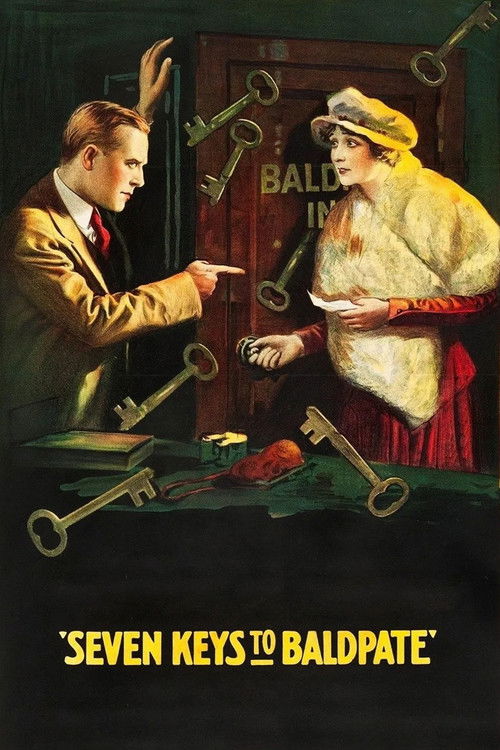
Seven Keys to Baldpate
1917
No user ratings available yet
Diversity score: 1.8 out of 10
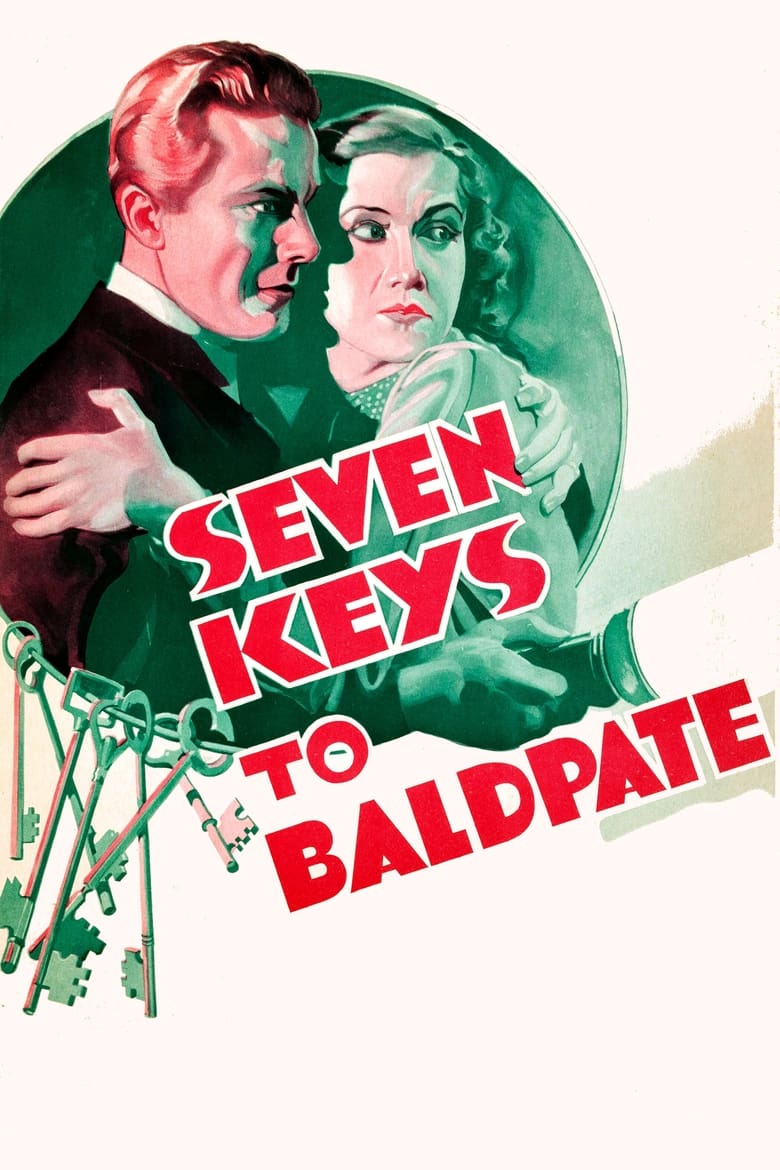
1935
NRDirector
William Hamilton
Runtime
80 minutes
Average Rating
No ratings yetSynopsis
A writer, looking for some peace and quiet in order to finish a novel, takes a room at the Baldpate Inn. However, peace and quiet are the last things he gets, as there are some very strange goings-on at the establishment.
Overall Score
Limited
Category Breakdown
LGBTQ+ Representation
The film lacks any discernible queer subtext or non-cisnormative identities. It operates within the strict social constraints of the 1930s, offering no character agency regarding sexual orientation.
Gender Representation
The narrative follows traditional genre conventions, centering on a male writer. While romance is present, it likely reinforces standard heterosexual courtship and domestic roles rather than subverting hierarchies.
Racial & Ethnic Diversity
Reflecting the homogeneous casting standards of 1935, the film lacks non-white majority representation. The remote inn setting suggests a culturally uniform ensemble typical of the era.
Religious & Cultural Diversity
The whodunit structure upholds traditional social orders and decorum. The plot focuses on individual ownership and property rather than offering any critique of systemic power or Western institutions.
Disability Representation
There is no evidence of characters with visible or invisible disabilities. Disability is not a narrative driver, and no characters are portrayed through the lens of neurodivergence or chronic illness.
Strengths
Areas for Improvement
AI Analysis
Seven Keys to Baldpate is a quintessential product of its time, prioritizing mystery-comedy tropes over social commentary. The film functions as a closed-room whodunit that reinforces the established social and racial hierarchies of the mid-1930s. The narrative architecture lacks the intentionality to engage with intersectional themes. Instead, it relies on a culturally homogeneous framework and standard genre expectations to drive its suspense and deception. Ultimately, the film serves as a period-typical exploration of genre, offering no disruption to the conventional social structures prevalent in early sound-era cinema.
No reviews yet. Be the first to share your thoughts on this movie!
Use the rating form above to leave a star rating and optional review.