Find another title
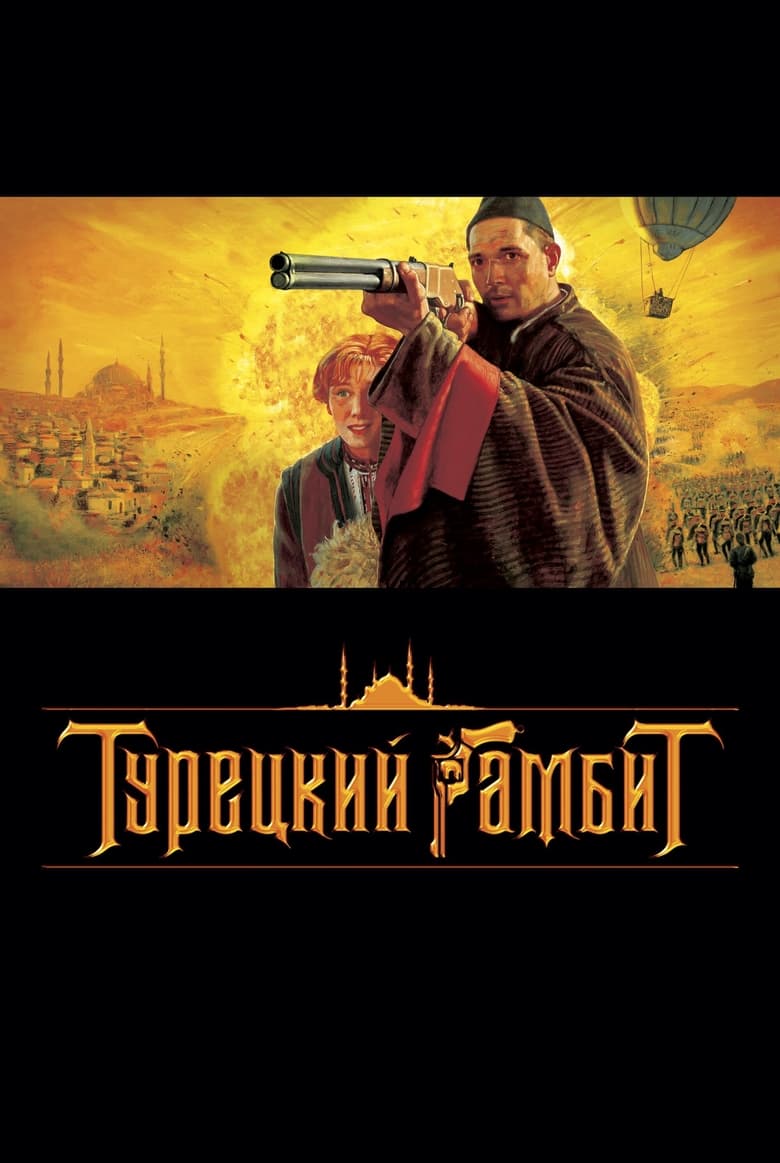
The Turkish Gambit
2005
Director
Dzhanik Fayziev
Runtime
130 minutes
Average Rating
No ratings yetSynopsis
The film is based on the second book from the Adventures of Erast Petrovich Fandorin series of novels written by the Russian author Boris Akunin. The film takes place in 1877 during the Russian-Turkish war. Erast Fandorin has just escaped from Turkish prison and is trying to get on the Russian side as soon as possible to give important information about the upcoming attack of the enemy. On his way he meets Varvara Suvorova, a young lady who is going to see her fiancée - a soldier of the Russian army. Erast also knows that there is a spy somewhere in the Russian army, everyone is under suspicion.
Where to Watch
Diversity & Representation
Overall Score
Limited
Category Breakdown
LGBTQ+ Representation
The film adheres to the heteronormative social structures of the 1870s. There is no evidence of non-cisnormative gender identities or same-sex intimacy within the plot.
Gender Representation
The narrative reinforces conventional roles, placing Erast Fandorin in the primary position of agency. Varvara Suvorova is central, yet her role acts more as a catalyst for the male protagonist.
Racial & Ethnic Diversity
The setting reflects the multi-ethnic reality of the Russian and Ottoman Empires. By featuring Russian and Turkish identities, the film moves beyond a homogeneous Anglo-centric perspective.
Religious & Cultural Diversity
The story operates within the established moral and political logic of the 19th century. It focuses on state loyalty and imperial maneuvering rather than deconstructing traditional institutions.
Disability Representation
Characters are presented through traditional adventure archetypes. There are no prominent depictions of neurodivergence or physical disabilities within the narrative.
Strengths
- The geopolitical setting provides a nuanced view of the era's complex, multi-ethnic demographic landscape.
- The collision of Russian and Turkish identities avoids a purely Anglo-centric perspective.
Areas for Improvement
- The film reinforces traditional gender hierarchies, limiting female agency to a catalyst for the male lead.
- The narrative lacks representation of neurodivergence, physical disabilities, or LGBTQ+ identities.
- The story operates within established imperial logic without offering critiques of institutional authority.
AI Analysis
The Turkish Gambit is a period piece that prioritizes historical fidelity and classical storytelling tropes. It functions as a traditional geopolitical drama set during the Russian-Turkish War, focusing on espionage and state loyalty. While the film offers a broader ethnic palette than many Western productions due to its setting, it remains conservative regarding social hierarchies. The narrative structure favors established imperial frameworks and traditional gender roles. Ultimately, the film serves as a window into 19th-century institutional authority rather than a tool for social disruption or diverse representation.
Rate this Movie
Reviews
No reviews yet. Be the first to share your thoughts on this movie!
Use the rating form above to leave a star rating and optional review.