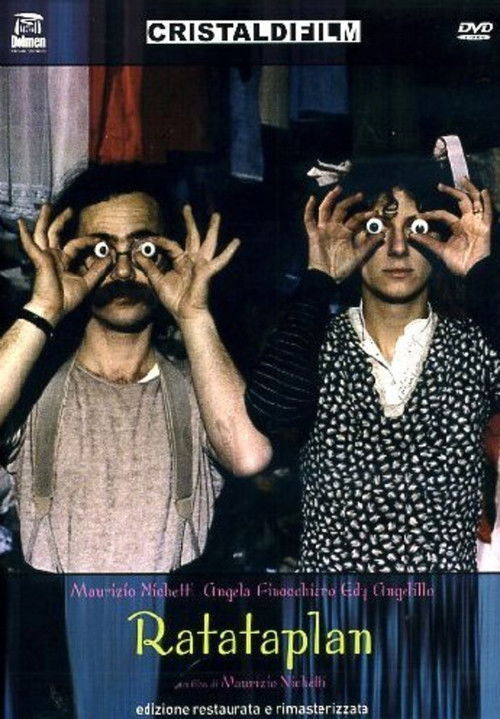
Ratataplan
1979
No user ratings available yet
Diversity score: 2.3 out of 10

1986
Director
Shusuke Kaneko
Runtime
68 minutes
Average Rating
No ratings yetSynopsis
A drunk office worker spots a discarded doll in the trash and decides to bring it home. When the doll mysteriously comes to life as a normal sized but naked young woman his life gets very complicated.
Overall Score
Limited
Category Breakdown
LGBTQ+ Representation
The film centers on a heteronormative premise involving a male protagonist and a female figure. There is no evidence of non-cisnormative identities or queer-coded exploration.
Gender Representation
The narrative relies on a male character interacting with a female figure, suggesting traditional gender hierarchies. It is unclear if the female character possesses agency or remains a passive object.
Racial & Ethnic Diversity
As a mid-1980s Japanese production, the cast appears homogeneous. There is no evidence of intentional color-blind casting or diverse ethnic representation.
Religious & Cultural Diversity
The film functions as an escapist comedy grounded in Japanese corporate social norms. It lacks themes of anti-traditionalism or complex moral relativism.
Disability Representation
The supernatural 'living doll' element serves as a fantasy conceit rather than a representation of disability. No characters with physical or neurodivergent disabilities are present.
Strengths
Areas for Improvement
AI Analysis
Shusuke Kaneko’s work in this era focuses on genre-specific tropes rather than progressive narrative architecture or social critique. The film operates within the standard cultural and social frameworks of 1980s Japan. The story relies on conventional gender dynamics and a heteronormative structure. The central premise of a man and a living doll suggests a preoccupation with traditional tropes rather than intersectional storytelling. Overall, the film lacks meaningful representation across most diversity metrics. It functions as a standard genre comedy without addressing broader social or identity-based complexities.
1979

2007

2016

2002
2021

2001
2001

2015

1986

2004
2005

1986
No reviews yet. Be the first to share your thoughts on this movie!
Use the rating form above to leave a star rating and optional review.