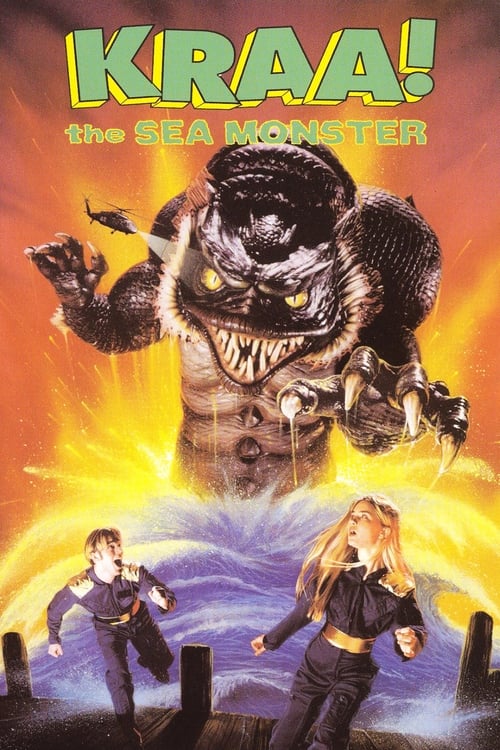
Kraa! The Sea Monster
1998
No user ratings available yet
Diversity score: 3.8 out of 10

1990
Director
Vladimir Potapov
Runtime
219 minutes
Average Rating
No ratings yetSynopsis
In an ordinary industrial Soviet town, notable only for presence of a radio-telescope, people start behaving strangely, in a robotic manner, while assuming geometry-inspired aliases and organizing into a new hierarchy. The phenomenon spreads via a device of alien origin, called “the mediator”, capable of implanting extraterrestrial minds into human bodies. The aliens are bound by limitations of the terrestrial technology, having to use the means at the disposal of humans to prepare the grounds for the full-scale invasion. With “the mediator" being unable to subdue minds of children, lunatics, geniuses, and rebels, a struggle over the fate of the town and the human civilization ensues.
Overall Score
Fair
Category Breakdown
LGBTQ+ Representation
The film lacks explicit mention of LGBTQ+ characters or non-heteronormative identities. The narrative focuses primarily on a collective psychological phenomenon rather than queer identities.
Gender Representation
A new, geometry-inspired hierarchy emerges, suggesting a disruption of traditional social structures. However, the absence of specific female protagonist arcs limits the depth of gender representation.
Racial & Ethnic Diversity
Set in a Soviet industrial town, the film likely reflects USSR-era ethnic diversity. The alien invasion serves as a metaphor for the erasure of individual and ethnic identity.
Religious & Cultural Diversity
The story critiques centralized authority by empowering those marginalized by systemic order. Children, geniuses, and rebels become the primary defenders of human autonomy against an alien hierarchy.
Disability Representation
The film reframes neurodivergence as a strength. By making 'lunatics' immune to the alien influence, it casts those with mental health conditions as essential guardians of human agency.
Strengths
Areas for Improvement
AI Analysis
The Mediator is a science fiction exploration of systemic control and individual resistance. It excels at subverting traditional hierarchies by positioning outsiders—such as rebels and the neurodivergent—as the heroes of the story. While the film lacks modern identity markers like explicit LGBTQ+ representation, it uses its sci-fi premise to examine the loss of self to an external 'other.' This thematic depth provides a nuanced look at identity and autonomy. Ultimately, the film's strength lies in its deconstruction of order. It elevates the non-conformist and the perceived 'outsider' to the center of the struggle for human survival.
1998

2010

2013

1990
2003

1957

1989

2010

1987

2018

2014

2011
No reviews yet. Be the first to share your thoughts on this movie!
Use the rating form above to leave a star rating and optional review.