Find another title
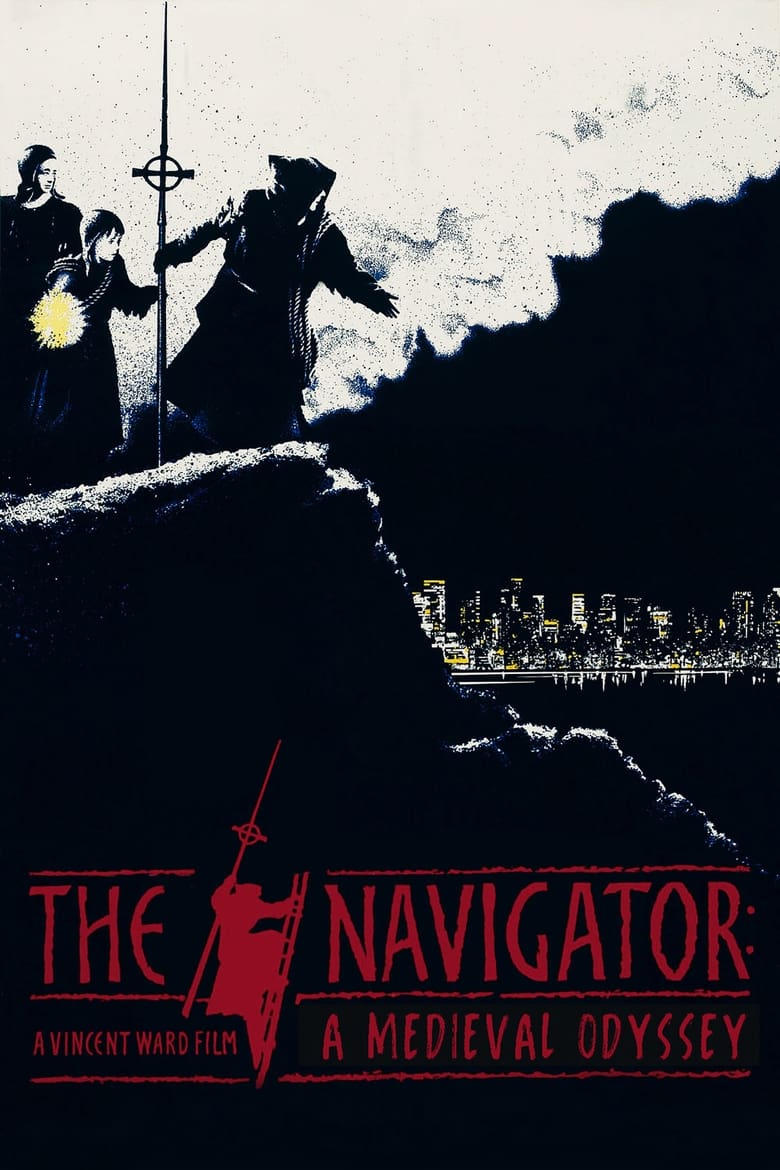
The Navigator: A Medieval Odyssey
1988
PGDirector
Vincent Ward
Runtime
92 minutes
Average Rating
No ratings yetSynopsis
Cumberland, 1348. The plague is spreading in medieval England. The remote village of little Griffin is also threatened. But the 9-year-old boy has a recurring dream that holds the key to a tiny hope of survival: a lake with a coffin floating on it. A white church with an iron cross. A falling glove. A falling silhouette. A torch tumble through a dark shaft into infinity. With his brother he recognizes in it a prophecy to escape the Black Death. So they embark with a few men on a journey to a distant cathedral, where they want to set up an iron cross as an offering to God. Her path leads them through a deep and dark mine shaft into an unknown land and completely outlandish time - into the present-day New Zealand of the 1980s.
Where to Watch
Diversity & Representation
Overall Score
Good
Category Breakdown
LGBTQ+ Representation
The film lacks any documented presence of LGBTQ+ characters. The narrative focuses strictly on a medieval pilgrimage and survivalist encounters.
Gender Representation
The story centers on the male experience of exploration and pilgrimage. It adheres to traditional medieval gender hierarchies with little evidence of female agency.
Racial & Ethnic Diversity
The film excels by depicting the collision between European pilgrims and Māori culture. This 'first contact' scenario challenges the traditional explorer myth and European supremacy.
Religious & Cultural Diversity
The narrative deconstructs Western religious dogmatism by juxtaposing it with Māori spirituality. It presents a nuanced view where traditional religious authority is rendered ineffective.
Disability Representation
There are no specific portrayals of physical or neurodivergent disabilities. While characters experience psychological distress, these are not central character arcs.
Strengths
- Powerful deconstruction of the traditional 'explorer' myth through cultural collision.
- Sophisticated portrayal of post-colonial interaction and the clash of civilizations.
- Effective critique of Western religious dogmatism and rigid authority structures.
Areas for Improvement
- Lack of representation for LGBTQ+ identities and non-heteronormative characters.
- Limited female agency and a heavy reliance on traditional gender hierarchies.
- Absence of specific portrayals regarding physical or neurodivergent disabilities.
AI Analysis
The film is a sophisticated exploration of post-colonial themes and cultural collision. It successfully disrupts the 'civilizing mission' trope by presenting a clash of civilizations that favors moral relativism over Western-centric truths. However, the film remains limited by its adherence to traditional gender roles and a lack of LGBTQ+ representation. The narrative architecture is heavily weighted toward masculine experiences of survival and religious mission. Ultimately, the work's strength lies in its ability to challenge the hegemony of Western thought through its encounter with indigenous Māori culture.
Rate this Movie
Reviews
No reviews yet. Be the first to share your thoughts on this movie!
Use the rating form above to leave a star rating and optional review.