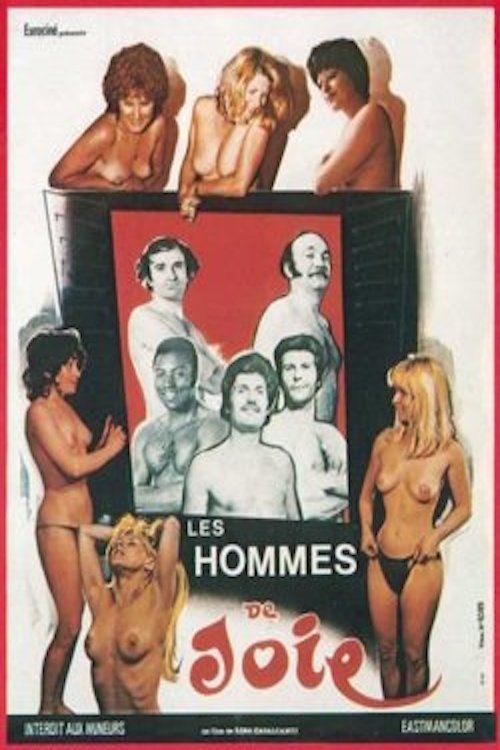
Ladies House of Pleasure
1976
No user ratings available yet
Representation score: 5.1 out of 10

Representation Score
Fair
1971
Director
Jean-Daniel Pollet
Runtime
95 minutes
Average Rating
No ratings yetNew Showbiz Analysis
Jean-Daniel Pollet’s work explores the margins of society, moving away from mainstream commercial narratives. The film disrupts traditional domestic stability by focusing on characters navigating transactional realities and moral ambiguity. While the narrative offers a nuanced view of gendered labor and the deconstruction of social norms, it remains limited by a lack of racial diversity. The focus is primarily on a specific Parisian demographic. Ultimately, the film serves as a gritty character study. It replaces moral absolutes with a complex, secular realism that examines how individuals navigate systemic social complexities.
Category Breakdown
The title hints at a playful break from rigid straight and cisgender norms, but the story doesn't confirm any non-traditional gender identities or queer relationships.
Women are shown taking active roles outside traditional domestic duties, like Marie working as a clairvoyant and prostitute. The film avoids clichéd domestic scenarios, emphasizing female independence and systemic exploitation.
The setting and characters mainly represent a localized, homogeneous Parisian population from the early 1970s. There is no indication of significant racial or ethnic diversity among the main characters.
The film questions traditional Western institutions by focusing on social outsiders rather than middle-class norms. It dismantles the sanctity of romantic structures by depicting the 'fiancé' as a manipulative pimp.
There are no visible or hidden disabilities among the main characters in this story.
Present on Screen
Limited or Absent
Official Synopsis
In a cul-de-sac in the Faubourg-Saint-Antoine, Leon shares two rooms with his sister Marie. In one, he receives his clients: he is a tailor. In the other, Marie receives her own: she is a clairvoyant. Leon was happy until he learned what Marie was hiding from him. She is actually a prostitute, and Maxime, her supposed fiancé, is her pimp. On the same day, Leon also discovers love in the form of Arlette, a provincial young woman picked up by Marie.
1976
1967
1976
1978

1975
1984
1981
1974
No reviews yet. Be the first to share your thoughts on this movie!
Use the rating form above to leave a star rating and optional review.