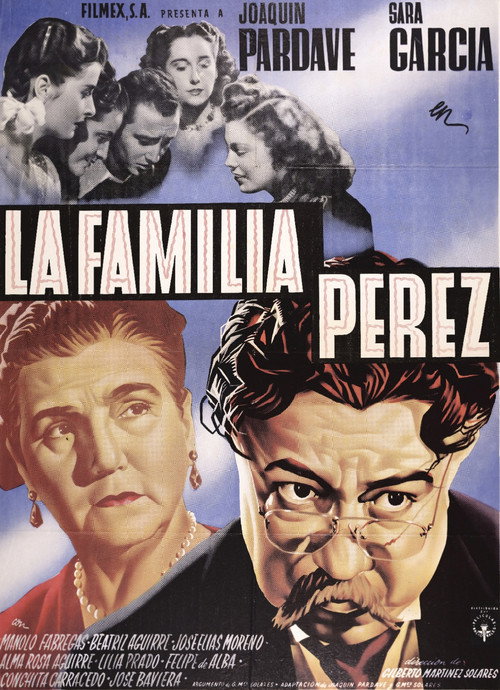
Perez Family
1949
No user ratings available yet
Representation score: 1.3 out of 10
Representation Score
Minimal
1951
Director
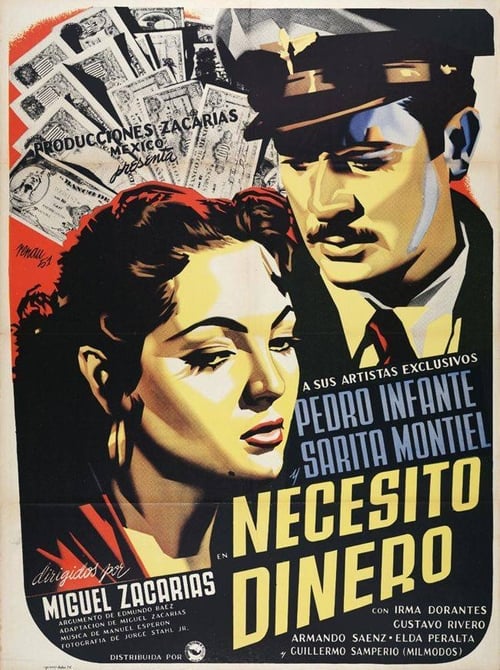
Miguel Zacarías
Runtime
126 minutes
Average Rating
No ratings yetNew Showbiz Analysis
I Need Money (1951) is a classic mid-century Mexican melodrama that operates within the established studio systems of its era. The plot relies on a standard class-struggle framework, where economic status dictates romantic outcomes. The film's structure is highly conventional, focusing on the friction between a working-class mechanic and a wealthy antagonist. This creates a narrative driven by traditional social and moral frameworks rather than a critique of institutional or class-based power structures. While the film provides cultural representation through its Mexican setting, it adheres to the period's standard gender roles and social hierarchies, offering little in the way of modern multi-layered depth.
Category Breakdown
The film follows a traditional heterosexual romantic storyline. There are no characters with non-binary or transgender identities, nor are there any narratives that challenge the assumption that everyone is straight or cisgender.
Maria Teresa is portrayed as a catalyst for male action, primarily serving to highlight male competition. The film reinforces conventional gender roles where women's primary role is to influence male characters.
The film centers on Mexican identity, representing a non-Anglo-Saxon culture. However, it does not explore the intersection of different aspects of identity such as race and gender.
The story reflects mid-century social stratification and class boundaries. It emphasizes economic stability and the consequences of deviating from established social norms.
The narrative contains no mention of characters with physical or neurodivergent disabilities.
Present on Screen
Limited or Absent
Official Synopsis
Manuel is a mechanic in love with the beautiful Maria Teresa. When the rich Jose Antonio courts his beloved Maria, Manuel realizes that he needs money and gets into trouble to get it.
1949
1953
1948
1952

1952
1950
1950
1957
No reviews yet. Be the first to share your thoughts on this movie!
Use the rating form above to leave a star rating and optional review.