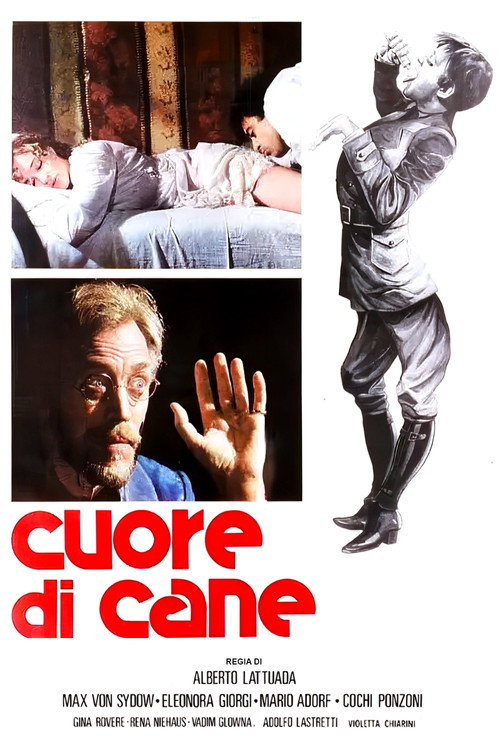
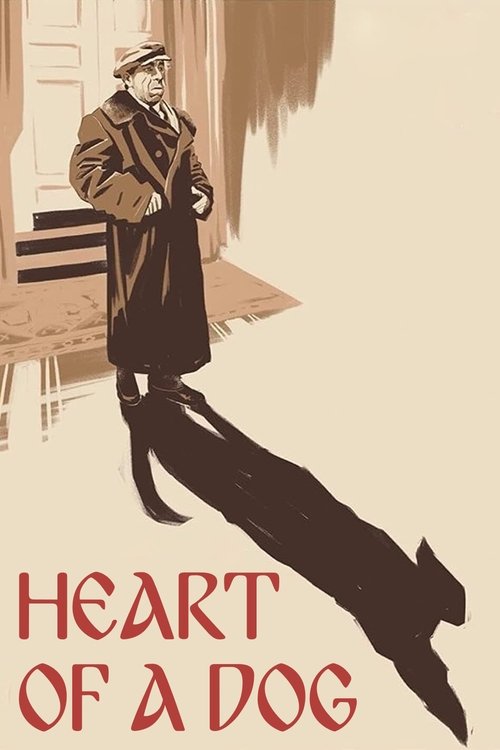
Heart of a Dog
1976
No user ratings available yet
Representation score: 5.6 out of 10
Representation Score
Limited
1988
PGDirector
Vladimir Bortko
Runtime
136 minutes
Average Rating
No ratings yetNew Showbiz Analysis
Vladimir Bortko’s adaptation is a sophisticated work of social satire that prioritizes political allegory over demographic diversity. It excels as a critique of systemic power and the risks of radical social engineering, using the central experiment to question the ethics of state-mandated change. However, the film lacks representation of LGBTQ+ identities and non-straight perspectives. It operates within a narrow, patriarchal, and homogeneous framework reflective of its 1920s Moscow setting but offering little in terms of gender, racial, or LGBTQ+ diversity. Ultimately, the film's impact lies in its cultural deconstruction. It uses the character of Sharikov to challenge the perceived benefits of a shifting political bureaucracy and the erosion of established social institutions.
Category Breakdown
The film does not include any LGBTQ+ characters or explore non-straight identities. The plot centers on the biological and societal impacts of the main experiment.
The story follows a patriarchal structure led by male figures such as Professor Preobrazhensky and Sharikov. Female characters are confined to traditional domestic roles that reinforce gender hierarchies.
Set in 1920s Moscow, the film shows a homogeneous Soviet society. It lacks intentional ethnic diversity, reflecting the demographics of its historical context.
The film offers a critical look at systemic social changes. It portrays the rise of the uneducated working class as a source of chaos and moral decline within the new social order.
The transformation of dogs into humans serves as a metaphor for neurodivergence. However, Sharikov’s condition is used mainly as a satirical device rather than a nuanced exploration of lived experience.
Present on Screen
Limited or Absent
Official Synopsis
In 1920s Moscow, shortly after the October Revolution, a stray dog named Sharik is taken in by Professor Preobrazhensky, a wealthy and respected surgeon. The professor performs a daring medical experiment on the dog that changes him into a human being. As the newly transformed Sharikov begins to navigate life in the professor’s apartment, his crude behavior and revolutionary ideas turn the household upside down.
1976
1966
2005
1968

1994
1966
No reviews yet. Be the first to share your thoughts on this movie!
Use the rating form above to leave a star rating and optional review.