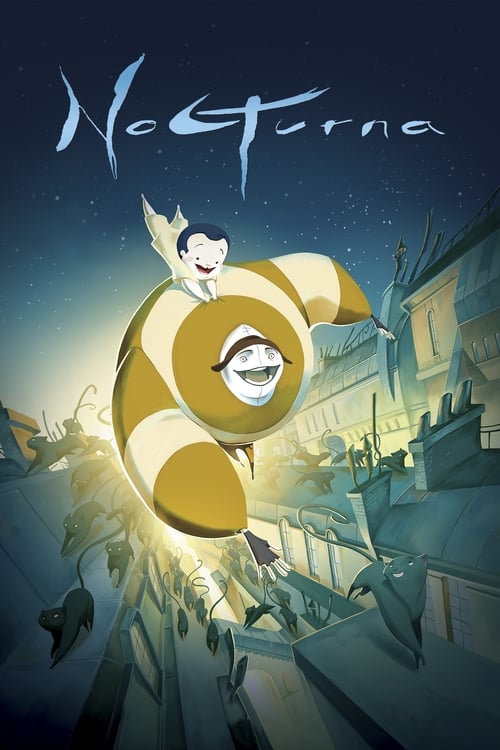
Nocturna
2007
No user ratings available yet
Diversity score: 5.1 out of 10

2011
Director
Juan Pablo Zaramella
Runtime
6 minutes
Average Rating
No ratings yetSynopsis
In a world controlled and timed by the light, a common man has a plan that could change the destiny.
Overall Score
Fair
Category Breakdown
LGBTQ+ Representation
The film lacks explicit depictions of sexual orientation or gender identity. The stylized, non-human characters offer no evidence of heteronormative or non-cisnormative romantic pairings.
Gender Representation
Characters are presented as stylized puppets that deconstruct traditional gendered aesthetics. The narrative avoids gender roles by focusing on an ambiguous protagonist navigating a mechanical environment.
Racial & Ethnic Diversity
The abstracted visual language avoids racial signifiers. While characters do not represent specific ethnic groups, the non-human entities transcend human racial categories through universalist abstraction.
Religious & Cultural Diversity
The film explores individual agency against a systemic, timed light. This surreal dreamscape moves away from traditional Western institutional narratives and conventional societal structures.
Disability Representation
There is no explicit evidence of characters with physical or neurodivergent disabilities. The protagonist's struggle against a rhythmic environment may serve as a metaphor for systemic barriers.
Strengths
Areas for Improvement
AI Analysis
Luminaris operates as a work of abstract expressionism rather than a study in demographic identity. By utilizing non-human, puppet-like figures, the film bypasses traditional metrics of race, gender, and orientation in favor of existential themes. The narrative's strength lies in its ability to disrupt conventional social tropes. It replaces human social hierarchies with a struggle between an individual and a rhythmic, systemic force, offering a unique perspective on agency. However, this abstraction results in a lack of specific representation. Because the characters are non-anthropomorphic, the film cannot explicitly promote or critique specific identity-based experiences.
2007
2011

2018
2020

1959
2004

1977
2001

2014
2008

2006

2006
No reviews yet. Be the first to share your thoughts on this movie!
Use the rating form above to leave a star rating and optional review.