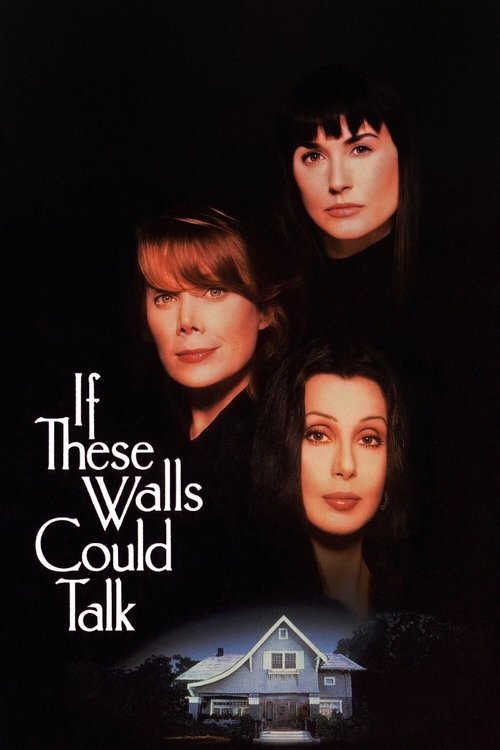
If These Walls Could Talk
1996
No user ratings available yet
Diversity score: 5.8 out of 10

1989
Director
Gregory Hoblit
Runtime
100 minutes
Average Rating
No ratings yetSynopsis
Holly Hunter plays a lonely, single, poorly educated Texan who finds herself pregnant with no means to support a child. To avoid giving up the child, she seeks an abortion. Denied an abortion in Texas the young woman hires a novice lawyer to plead her case in the US supreme court. Eventually the law is changed, but for the character it takes longer than nine months.
Overall Score
Fair
Category Breakdown
LGBTQ+ Representation
The film centers on a heteronormative legal struggle regarding reproductive rights. There is no discernible presence of LGBTQ+ characters or non-cisnormative identities within the primary cast.
Gender Representation
The narrative subverts traditional hierarchies by centering on a woman's struggle for bodily autonomy. Holly Hunter's character navigates a male-dominated legal apparatus, positioning female agency as the story's primary driver.
Racial & Ethnic Diversity
The focus remains heavily concentrated on the white protagonist and legal professionals. While avoiding overt stereotypes, agency is largely contained within a white-centric legal framework reflecting the era's historical limitations.
Religious & Cultural Diversity
The film critiques traditional institutions by highlighting tensions between religious morality and constitutional rights. It portrays religious dogma as a systemic barrier to personal liberty and individual privacy.
Disability Representation
There is no significant focus on visible or invisible disabilities. Character struggles are defined by socioeconomic status and legal standing rather than neurodivergence or physical disability.
Strengths
Areas for Improvement
AI Analysis
Roe vs. Wade is a procedural drama that excels in its deconstruction of gendered power dynamics. By placing a woman's fight for autonomy at the center of a male-dominated legal system, the film effectively challenges patriarchal constraints and traditional domestic expectations. However, the film lacks breadth in other areas of identity. The narrative is largely confined to a white-centric legal framework and lacks any meaningful LGBTQ+ representation or focus on disability, reflecting the specific historical lens of the 1970s legal battle. Ultimately, the film's strength lies in its thematic critique of religious-based legal structures. It prioritizes secular legalism and individual rights over state-mandated morality, making it a focused study of institutional friction.
1996
1995
2012

1998

2005

2011
No reviews yet. Be the first to share your thoughts on this movie!
Use the rating form above to leave a star rating and optional review.