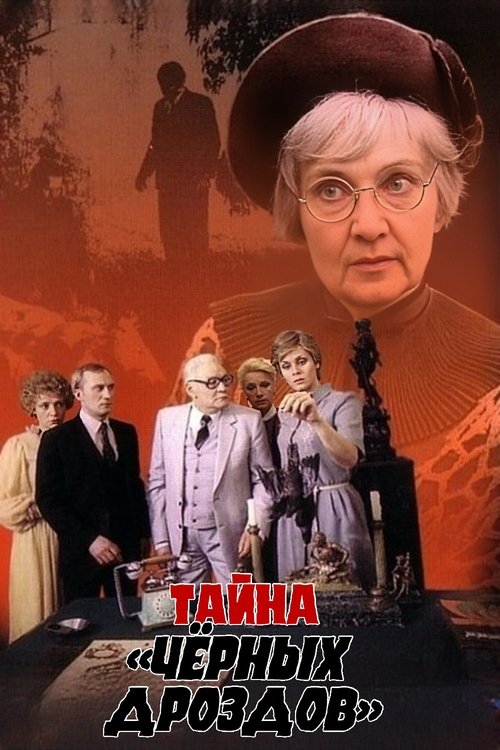
Secret of the Blackbirds
1983
No user ratings available yet
Diversity score: 3.1 out of 10

1970
RDirector
Michele Lupo
Runtime
98 minutes
Average Rating
No ratings yetSynopsis
An aristocratic English family gather for the reading of their father's will. The family are dismayed to find that everything has been left to Barbara, the deceased's favourite daughter. The butler is soon found stabbed to death and Sergeant Thorpe, the local bobby, telephones Scotland Yard for assistance. Inspector Grey arrives and he and Barbara narrowly escape being shot. Cousin Ted and his wife Pauline are both killed. Sergeant Thorpe recalls some photos which Ted asked to have developed...
Overall Score
Limited
Category Breakdown
LGBTQ+ Representation
The film lacks queer visibility or narratives that critique heteronormativity. The focus remains on a traditional aristocratic family structure without evidence of non-cisnormative identities.
Gender Representation
While Barbara is a central figure due to her inheritance, her agency is tied to her status as a favorite daughter. Female characters like Pauline are primarily framed through victimhood.
Racial & Ethnic Diversity
The setting and character names suggest a homogeneous Anglo-Saxon cast. The narrative reinforces the depiction of a white, upper-class family as the social norm.
Religious & Cultural Diversity
The plot revolves around the legalities of inheritance and the preservation of aristocratic lineage. It operates within traditional Western class structures and the sanctity of the nuclear family.
Disability Representation
There are no visible or invisible disabilities mentioned in the narrative. No specific details regarding neurodivergence or physical impairment are present.
Strengths
Areas for Improvement
AI Analysis
The film functions as a traditional genre piece that adheres to the social and demographic norms of 1970s crime cinema. It relies on established tropes of class and mystery within a very homogeneous setting. There is a notable absence of intersectional representation. The narrative focuses on the internal decay of a traditional social unit rather than challenging existing social hierarchies or providing diverse perspectives. Ultimately, the work reinforces conventional archetypes of the era, centering on a white, upper-class English family without introducing significant demographic variety.
1983
1972

1977

2005
No reviews yet. Be the first to share your thoughts on this movie!
Use the rating form above to leave a star rating and optional review.