
Shu Thayu?
2018
No user ratings available yet
Representation score: 5.7 out of 10
Representation Score
Fair
2019
Director
Koki Mitani
Runtime
127 minutes
Average Rating
No ratings yetNew Showbiz Analysis
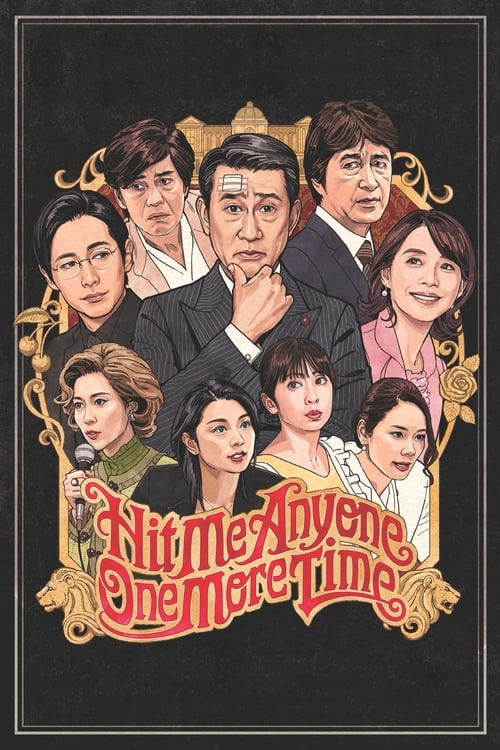
Hit Me Anyone One More Time is a political satire that uses amnesia to deconstruct the persona of a high-ranking official. It effectively challenges the archetype of the competent statesman, offering a critique of institutional authority and the instability of power structures. However, the film lacks significant representation of diverse identities. The narrative focus remains heavily on a male protagonist within a homogeneous socio-political setting, providing little evidence of diverse racial, ethnic, or LGBTQ+ identities. While the protagonist's cognitive impairment drives the plot, it functions primarily as a comedic device rather than a meaningful exploration of neurodivergence.
Category Breakdown
The film does not include any explicitly LGBTQ+ characters or non-straight relationships. While the comedy explores interpersonal dynamics, there is no clear indication of queer narratives.
The story focuses on a male Prime Minister with supreme power. Three secretaries play key roles, but their gender and influence are not clearly defined.
The film is set within the Japanese government and features a largely homogeneous cast. There is no indication of a multi-ethnic cast that would challenge traditional demographic expectations.
The film critiques traditional political institutions by showing a leader with low approval ratings. It portrays political authority as fragile, performative, and disconnected from the public.
Amnesia serves as the central plot device and comedic element. The narrative uses this neurological condition for situational irony rather than a deeper exploration of disability.
Present on Screen
Limited or Absent
Official Synopsis
Keisuke Kuroda wakes up in a hospital bed unable to remember who he is. While sneaking out of the hospital, he sees a glimpse of the news and realizes that he is the Prime Minister of Japan. His approval rating was the lowest in the history of modern Japan. During a recent speech, a citizen had thrown a rock at him causing him to lose his memory. Keisuke Kuroda’s subordinate takes him to the official residence of the prime minister where he tries to implement changes to the country. The only people aware that he has lost his memory are his three secretaries.
2018

1994
2008

2023

2012

2021

2023

2014
No reviews yet. Be the first to share your thoughts on this movie!
Use the rating form above to leave a star rating and optional review.