Find another title
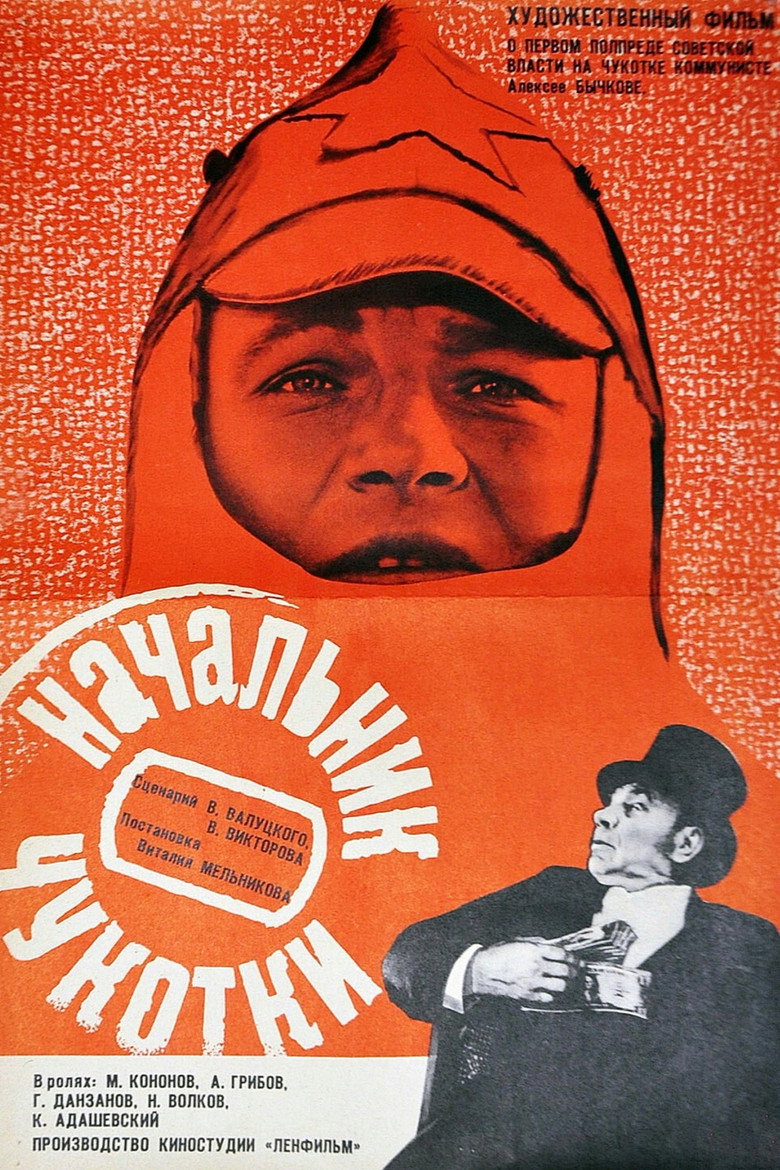
The Chief of Chukotka
1967
Director
Vitaliy Melnikov
Runtime
86 minutes
Average Rating
No ratings yetSynopsis
Young patriotic young man ends up in the on Chukotka right after the civil war, where he intends to spread ideas of justice and equality among the natives. As it happens, instead he learn the local capitalist ways, and he start profitable fur trading with US, Japanese and other merchants.
Where to Watch
Diversity & Representation
Overall Score
Fair
Category Breakdown
LGBTQ+ Representation
The film contains no evidence of LGBTQ+ characters or narratives. It adheres to the social norms of 1960s Soviet cinema.
Gender Representation
The narrative focuses on patriotic young men and merchant-driven trade, suggesting a masculine-centric framework. However, the protagonist's moral ambiguity offers a departure from traditional heroic archetypes.
Racial & Ethnic Diversity
Significant representation of indigenous Chukchi populations is central to the story. The inclusion of US and Japanese merchants creates a multi-ethnic landscape that challenges cinematic homogeneity.
Religious & Cultural Diversity
The film critiques Western-aligned economic structures and individualist motivations. It prioritizes a narrative of systemic restructuring over the corrupting influence of international capitalist trade.
Disability Representation
There is no discernible evidence regarding the portrayal of physical or neurodivergent disabilities in this work.
Strengths
- Strong representation of indigenous Chukchi populations and their role in the narrative.
- Effective critique of capitalist institutions and international commercial interests.
- A multi-ethnic landscape featuring diverse international merchant characters.
Areas for Improvement
- Lack of representation for LGBTQ+ identities and non-heteronormative narratives.
- A masculine-centric framework that limits gender diversity in character arcs.
- No discernible inclusion or portrayal of characters with disabilities.
AI Analysis
The film serves as a complex historical drama that subverts the 'civilizing mission' trope. By following a protagonist who shifts from idealism to economic pragmatism, it explores the friction between social engineering and global commerce. While the film lacks contemporary representation for LGBTQ+ and disability identities, it excels in its depiction of indigenous agency. The narrative centers on the interaction between the state and native peoples within a geopolitical struggle. Ultimately, the work functions as an anti-imperialist critique. It frames Western commercial interests as a disruptive force, using the fur trade to highlight the tension between collective social goals and individualist profit.
Rate this Movie
Reviews
No reviews yet. Be the first to share your thoughts on this movie!
Use the rating form above to leave a star rating and optional review.