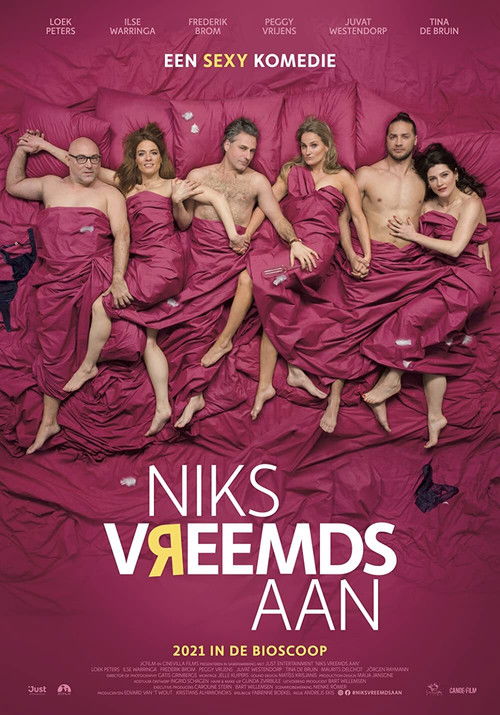
Nothing Strange About It
2021
No user ratings available yet
Representation score: 3.7 out of 10

Representation Score
Fair
2023
TV-MADirector
Joosje Duk
Runtime
93 minutes
Average Rating
No ratings yetNew Showbiz Analysis
Happy Ending functions as a subversion of the typical romantic comedy. By focusing on a woman proposing to introduce a third person into her relationship, the film deconstructs monogamous, straight-centered structures and challenges traditional domestic hierarchies. The title itself serves as a pivot, shifting from romantic clichés to a commentary on sexual autonomy. The film's strength lies in its focus on individual empowerment and the reconfiguration of standard relationship models. However, the lack of specific details regarding racial, ethnic, or disability representation prevents a complete picture of the film's inclusivity. The narrative's progressive lean is primarily focused on the subversion of romantic and social norms.
Category Breakdown
The film questions the assumption that everyone is straight or cisgender by exploring the idea of adding a third person to a relationship. Although the identity of the third person isn't confirmed, the story hints at non-traditional relationship models.
The female protagonist plays a significant role in driving the story. She actively initiates changes within her home environment instead of being passive.
There is insufficient information regarding the cast's racial or ethnic composition to provide a meaningful assessment.
The narrative focuses on individual fulfillment and relational ethics, moving away from traditional structures like marriage. It examines a modern rejection of conventional domestic norms.
There is no evidence regarding the inclusion of characters with visible or invisible disabilities.
Present on Screen
Limited or Absent
Official Synopsis
A young woman quietly unsatisfied in the bedroom by her boyfriend puts their relationship to the test when she proposes to open up their sex life to a third person.
2021

2022

2020
2013

2018
2015

2017

2016
No reviews yet. Be the first to share your thoughts on this movie!
Use the rating form above to leave a star rating and optional review.