
Hana's Miso Soup
2015
No user ratings available yet
Representation score: 6.0 out of 10
Representation Score
Fair
2024
Director
Sho Tsukikawa
Average Rating
No ratings yetNew Showbiz Analysis
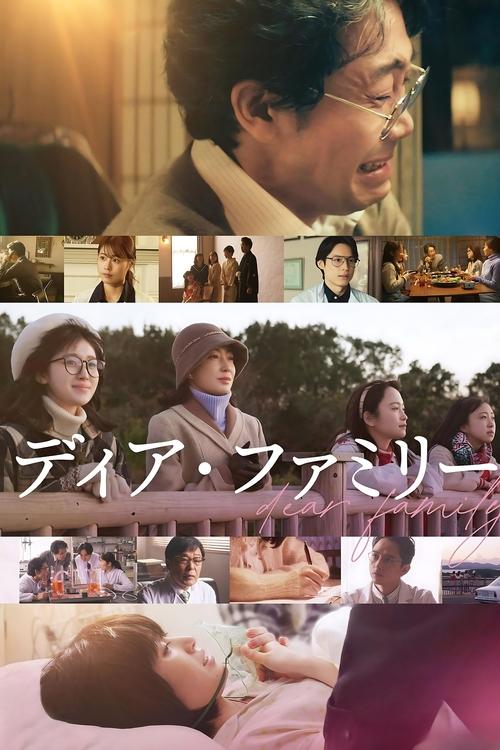
Dear Family is a character-driven medical drama that prioritizes individual control over broad demographic diversity. It excels in exploring how a family deals with the systemic and emotional complexities of a life-threatening congenital condition. The film challenges fatalism by framing the pursuit of medical knowledge as a tool for empowerment. However, it remains within a traditional framework, lacking multi-layered representation or diverse social structures.
Category Breakdown
The film focuses on a traditional nuclear family unit. There are no LGBTQ+ characters or narratives that challenge the assumption that everyone is straight or cisgender.
The story features a collaborative parental unit where the father leads in medical research while the mother plays a central role in the emotional journey.
This is a localized Japanese drama showing a homogeneous social structure. It lacks multi-ethnic character dynamics or diverse casting.
The story explores the tension between traditional acceptance of mortality and modern scientific intervention. It emphasizes the importance of scientific knowledge over predetermined biological or spiritual outcomes.
The plot centers on a congenital heart disease. The narrative gives the character and her family real power, avoiding clichés by focusing on the complexities of living with a chronic illness.
Present on Screen
Limited or Absent
Official Synopsis
Nobumasa Tsuboi (Yo Oizumi) runs a small factory in a small town. He has a daughter Yoshimi Tsuboi (Riko Fukumoto) who suffers from a congenital heart disease. A doctor tells Nobumasa Tsuboi that his daughter will only live for about 10 more years. Nobumasa Tsuboi is devastated that his daughter won't live past the ago of 20. Nobumasa Tsuboi and his wife Yoko Tsuboi (Miho Kanno) cannot accept the diagnosis. Even though he has no medical knowledge or experience, Nobumasa Tsuboi begins to study about artificial hearts.
2015

2020
2020

2024

2021
2020

2009

1997
No reviews yet. Be the first to share your thoughts on this movie!
Use the rating form above to leave a star rating and optional review.