The Bachelor
1955
No user ratings available yet
Diversity score: 2.6 out of 10
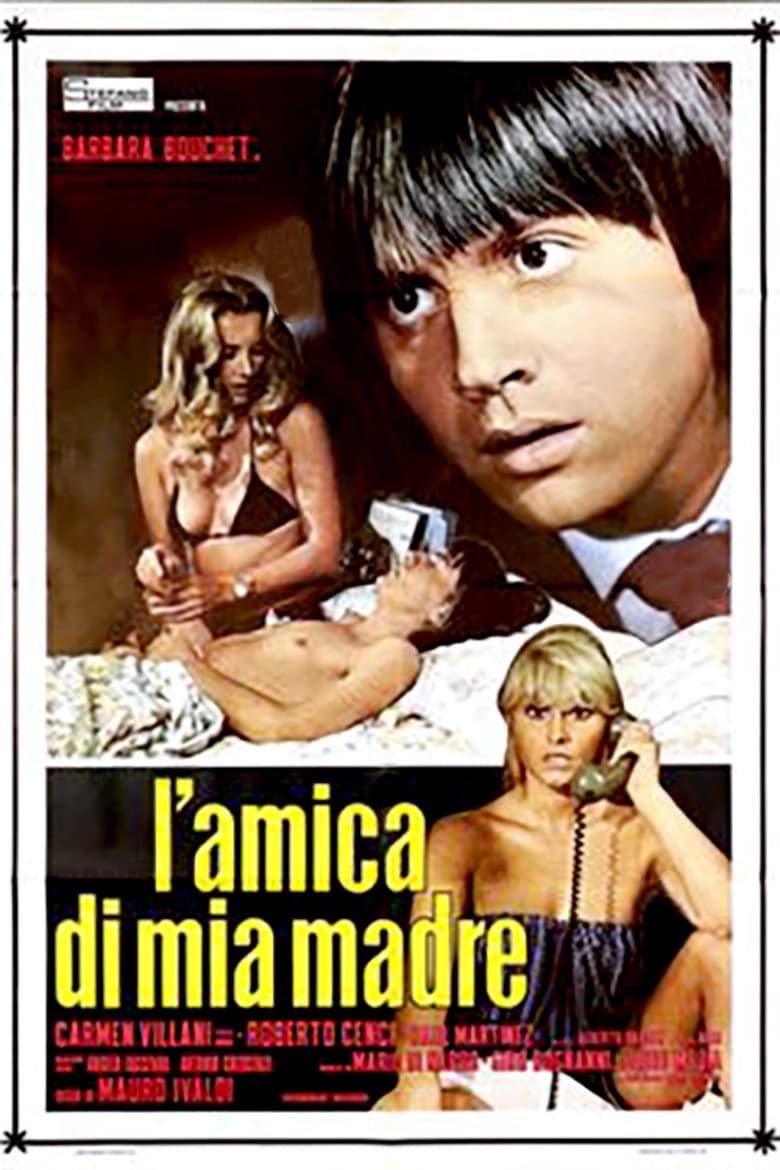
1975
Director
Mauro Ivaldi
Runtime
95 minutes
Average Rating
No ratings yetSynopsis
A woman, who has just separated from her husband, comes to stay at the villa of the friend. The friend is away (and throughout the whole movie only appears as a voice on the phone), but the woman's goofy son (who looks like he just escaped from the Monkees) is staying there too. The son falls for her, not surprisingly since she always dresses in skimpy miniskirts or bikinis, and rarely closes the door when she is changing clothes or showering.
Overall Score
Limited
Category Breakdown
LGBTQ+ Representation
The film lacks any discernible LGBTQ+ characters or narratives. The story remains centered on a traditional, fractured heterosexual dynamic.
Gender Representation
While the protagonist shows independence through her separation, her characterization relies heavily on voyeuristic tropes. The narrative architecture prioritizes the male gaze and revealing attire over structural agency.
Racial & Ethnic Diversity
The production reflects the demographic homogeneity of 1970s Italian cinema. There is no evidence of a diverse cast or intersectional casting within this localized European setting.
Religious & Cultural Diversity
The film explores the breakdown of the nuclear family through a domestic lens. It uses this dysfunction for comedic purposes rather than offering a systemic critique of Western institutions.
Disability Representation
There is no mention of characters with visible or invisible disabilities in the narrative.
Strengths
Areas for Improvement
AI Analysis
My Mother's Friend operates strictly within the commercial tropes of 1970s Italian comedy. The film prioritizes visual voyeurism and period-specific genre conventions over meaningful social commentary or character depth. The narrative lacks intersectional representation, focusing instead on a homogeneous European setting. While it touches on the dissolution of the traditional family unit, it does so through a lens of dysfunction rather than progressive critique. Ultimately, the film reinforces conventional social hierarchies. It relies on established cinematic norms that favor the male gaze and traditional character archetypes rather than challenging existing power structures.
1955

1988
1981
1980
1976
1973

1974
1974
1976
1971
1977
1972
No reviews yet. Be the first to share your thoughts on this movie!
Use the rating form above to leave a star rating and optional review.