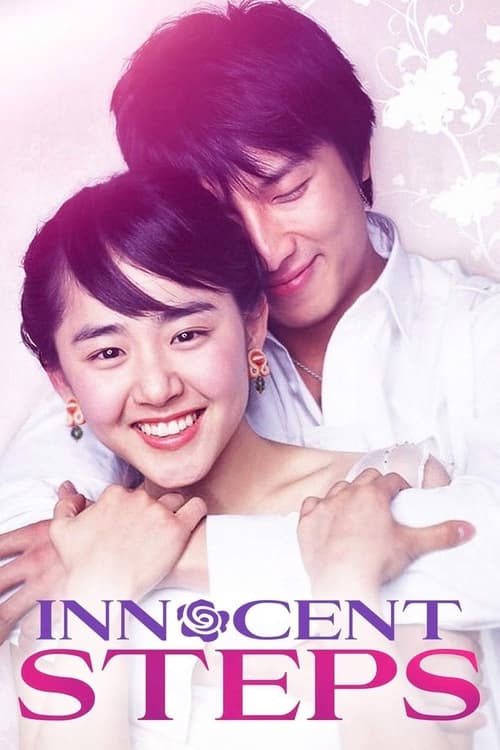
Innocent Steps
2005
No user ratings available yet
Representation score: 4.3 out of 10

Representation Score
Good
2026
Director
Josef Kubota Wladyka
Runtime
122 minutes
Average Rating
No ratings yetNew Showbiz Analysis
Ha-Chan, Shake Your Booty! opens with the vibrant, colorful chaos of Tokyo’s ballroom scene, a space where bodies move and grief is danced away. The film’s argument is that intimacy—whether with the living or the dead—is the primary currency of survival. Haru, played with magnetic intensity by Rinko Kikuchi, is the engine of this narrative, her fantasies of her dead husband Luis (Alejandro Edda) dressed as a giant black bird serving as a surreal bridge between memory and desire. The film’s visual style, praised for its buoyancy, mirrors Haru’s internal state: a kaleidoscope of color and motion that refuses to settle into static mourning. The sold meaning is one of fluidity and reinvention. Haru’s infatuation with Fedir (Alberto Guerra), a Latin American instructor in an open marriage, is not a betrayal of her past but an expansion of her present. The film treats her open marriage and subsequent emotional entanglements with a lightness that challenges traditional narratives of widowhood. However, the film’s internal logic pulls apart when Haru’s actions escalate from fantasy to vandalism and jail. The camera loves Haru’s agency, but the consequences of her actions are handled with a surreal detachment that borders on the absurd. The last image, Haru helping Luis back into his bird costume, suggests that her grief is not resolved but rather integrated into her ongoing performance of life. The film’s argument is that to dance is to accept the chaos of existence, even when it leads to a night in jail. The ending is not a moral verdict but a continuation of the dance, a refusal to let death have the last word.
Category Breakdown
Fedir’s open marriage with Mila is treated as a stable professional norm, not a scandal. No same-sex couples appear in explicit romantic or sexual scenes. The arrangement serves as a plot device for Haru’s jealousy rather than the moral center.
Haru actively pursues Fedir, breaks into his apartment, and faces jail for her actions. The male gaze remains dominant, centering Luis and Fedir as objects of longing. Her sister Yuki functions primarily as a supportive helper to coax Haru back.
The cast is visibly mixed, featuring Japanese, Latin American, and Mexican actors. Interracial intimacy is unremarkable and central to the plot. Latin American characters are somewhat typecast as passionate dance partners, with limited exploration of their specific cultural backgrounds.
Tokyo’s ballroom scene is depicted as a vibrant, multicultural space where grief is processed through movement. Traditional family structures are flexible, with Haru’s open marriage treated with nuance. The film relies on an idealized, aestheticized view of Tokyo’s nightlife and dance culture.
No characters with physical, mental, or neurological disabilities are depicted. Luis’s death is a medical event rather than a chronic condition. The cast and plot contain no representations of disability.
Present on Screen
Limited or Absent
Official Synopsis
Haru and Luis love competing in Tokyo’s ballroom dance scene, but after tragedy strikes, Haru withdraws into isolation. When friends coax her back to the studio, she develops an infatuation with the new instructor. She must face what comes next as sparks fly.
2005

2023

2018

2008
1996

2011
2023

2024
No reviews yet. Be the first to share your thoughts on this movie!
Use the rating form above to leave a star rating and optional review.