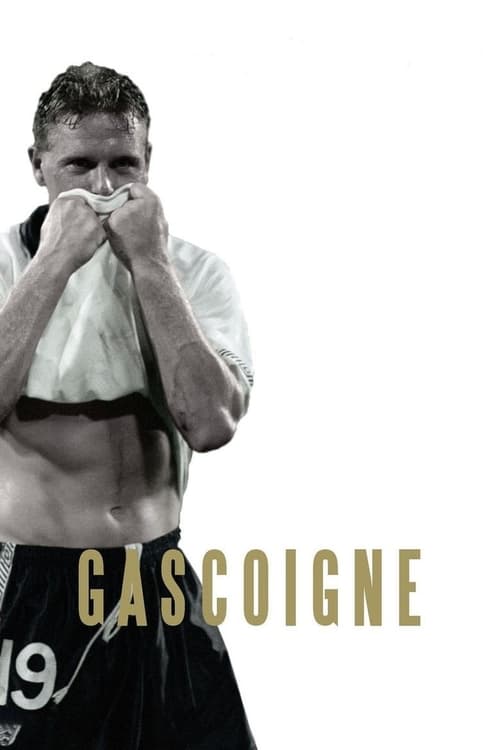
Gascoigne
2015
No user ratings available yet
Representation score: 3.8 out of 10

Representation Score
Fair
1996
15Director
Ken McGill
Runtime
70 minutes
Average Rating
No ratings yetNew Showbiz Analysis
The film opens with archival footage and newspaper clippings that establish Paul Gascoigne not merely as an athlete, but as a national cultural figure, a "legend" constructed by the press. This framing sets the stage for a documentary that is less about football and more about the crushing weight of public expectation. The sold meaning is clear: the "legend" is a hollow construct, a myth that devours the man inside it. The camera loves Gascoigne’s brilliance, using slow motion and warm lighting to elevate his skill, but it is his private disarray that the film truly lingers on. The central contradiction lies in the gap between the polished, authoritative voice of Sean Connery and the messy, volatile reality of Gascoigne’s life. Connery’s narration lends a gravitas that contrasts sharply with Gascoigne’s often chaotic on-screen persona, creating an ironic undercurrent. The film suggests that the system that creates the legend does not care for the man, treating his alcoholism as a symptom of the industry’s demands rather than a personal failing. This is a critique of the myth-making process, positioning the media and public expectations as the true antagonists. The ending is the moral verdict: a fragile hope rather than a definitive triumph. Gascoigne is not punished by the narrative; he is pitied. The film rewards the human struggle over the athletic peak, suggesting that the cost of fame is a price that can never be fully paid. This is a meditation on the fragility of the male ego in the public eye, a story that is as much about the construction of identity as it is about the destruction of it. The camera’s love is for the man behind the myth, a figure who is both celebrated and consumed by the very legend that defines him.
Category Breakdown
The narrative centers on heterosexual dynamics, specifically the tension between Gascoigne and his wife, Bianca. No same-sex intimacy or non-heteronormative identities appear on screen.
Bianca Gascoigne serves as the stable domestic anchor, framed as the victim of her husband’s volatility. The film treats male emotional instability as a tragic flaw rather than a moral failing, while women remain the silent, suffering backdrop to the male legend.
The cast is overwhelmingly white, reflecting the unmarked norm of 1990s British football. Non-white players appear only as peripheral teammates, lacking individual depth or narrative weight beyond their function in the squad.
National identity is treated as a crushing weight, with the media and public expectations framed as the true antagonists. The film critiques the myth-making of the "legend," positioning institutional fame as a destructive force that consumes the individual.
Alcoholism is depicted as a serious, ongoing condition rather than a temporary plot device. Gascoigne’s physical and mental deterioration is shown with unflinching realism, refusing to offer a neat redemption or cure by the final frame.
Present on Screen
Limited or Absent
Official Synopsis
The story of Paul Gascoigne through the 1995-96 season, as one of the most famous football players in the UK.
2015
2014

2016
2022
2021
2013
2022

2020
No reviews yet. Be the first to share your thoughts on this movie!
Use the rating form above to leave a star rating and optional review.