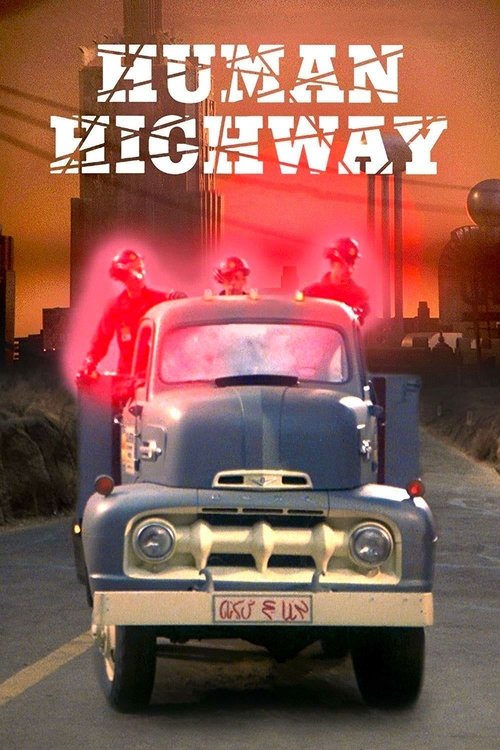
Human Highway
1982
No user ratings available yet
Diversity score: 5.4 out of 10

1986
Director
Piotr Szulkin
Runtime
84 minutes
Average Rating
No ratings yetSynopsis
Scope is a prisoner on a behemoth space station and is chosen, like all his fellow prisoners, to 'volunteer' for the exploration of far-away planets. Landing on planet Australia 458, he is given a hero's welcome with all the sex, booze, and violence that any one man can stomach. But as his new caretakers push him towards even more heinous and deplorable acts, Scope finds that his freedom comes with a high price; his own violent demise, broadcast live for the viewing pleasure of Australia 458's inhabitants.
Overall Score
Fair
Category Breakdown
LGBTQ+ Representation
The film lacks explicit queer narratives or non-cisnormative identities. Instead, it focuses on state propaganda and the dehumanization of individuals within a totalitarian framework.
Gender Representation
The story operates within a patriarchal, authoritarian structure. It deconstructs the masculine 'hero' mythos by portraying the protagonist as a disposable tool of the state.
Racial & Ethnic Diversity
The narrative prioritizes socioeconomic and political status over ethnic identity. The speculative setting of Australia 458 serves as a metaphor for social stratification rather than racial diversity.
Religious & Cultural Diversity
The film excels in its critique of institutional power. It portrays patriotism and heroism as corrupt instruments used by the state to manipulate the masses.
Disability Representation
There is no specific evidence of physical or neurodivergent representation. The film instead explores the metaphorical loss of agency and the stripping of personhood under totalitarianism.
Strengths
Areas for Improvement
AI Analysis
Piotr Szulkin’s work is a sophisticated exercise in postmodern skepticism. It prioritizes a systemic critique of power over demographic inclusion, focusing on how institutions manufacture identity and social behavior. The film's strength lies in its cultural deconstruction of 'glory' and state-sanctioned heroism. It uses a dystopian setting to challenge the validity of grand narratives and traditional morality. However, the film lacks specific representation regarding race, gender, or LGBTQ+ identities. It functions primarily as a political satire rather than a diverse character study.
1982

2022
2012

1981
No reviews yet. Be the first to share your thoughts on this movie!
Use the rating form above to leave a star rating and optional review.