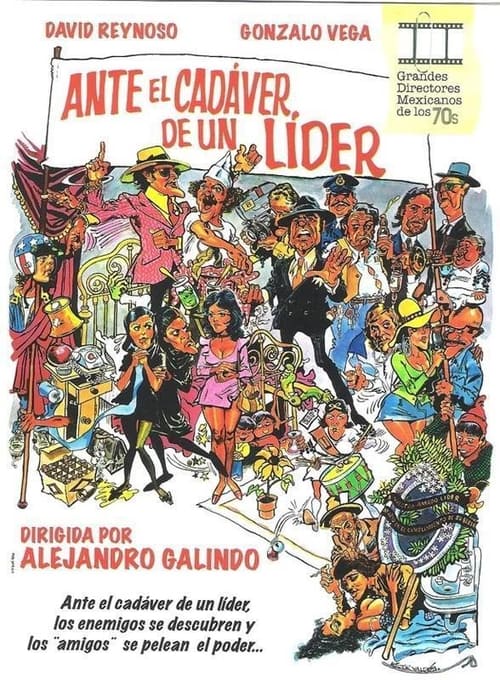
Before the Corpse of a Leader
1974
No user ratings available yet
Diversity score: 6.3 out of 10
1951
TV-PGDirector
Alejandro Galindo
Runtime
120 minutes
Average Rating
No ratings yetSynopsis
A worker overwhelmed by the economic crisis and the cost of living is accidentally propaganda of a political party, apparently from left, who convinces him to join their ranks and defending the working class. After entering through a ritual as mysterious as typical, you will realize demagoguery and arrangements existing between union leaders to maintain the status quo unchanged and profit from mafia practices.
Overall Score
Fair
Category Breakdown
LGBTQ+ Representation
The film lacks identifiable LGBTQ+ characters or non-cisnormative narratives. The story focuses strictly on the protagonist's social and professional standing within a traditional mid-century framework.
Gender Representation
The narrative centers on the male protagonist's experience with political paranoia and domestic pressures. It adheres to period social structures without actively subverting traditional gender hierarchies.
Racial & Ethnic Diversity
A culturally cohesive Mexican cast avoids Anglo-centric hegemony. By centering on local socioeconomic crises, the film asserts a strong regional identity that resists Western-centric cinematic norms.
Religious & Cultural Diversity
The film offers a progressive critique of power structures and the 'Red Scare' mentality. It deconstructs political labels as tools of manipulation used by corrupt union leaders.
Disability Representation
There are no prominent depictions of physical or neurodivergent disabilities used as central plot devices within the narrative.
Strengths
Areas for Improvement
AI Analysis
Alejandro Galindo’s satire succeeds by focusing on the sociological complexities of Mexican urban life. The film's strength lies in its sharp critique of institutional corruption and the way political labels are weaponized against the working class. However, the film remains tethered to the social norms of its era. The lack of diverse gender roles and the absence of LGBTQ+ representation reflect a narrow, traditionalist perspective on identity. Ultimately, the work is a powerful regional statement. It prioritizes systemic critique and class dynamics over a broad spectrum of social representation, making it a focused study of political manipulation.
No reviews yet. Be the first to share your thoughts on this movie!
Use the rating form above to leave a star rating and optional review.