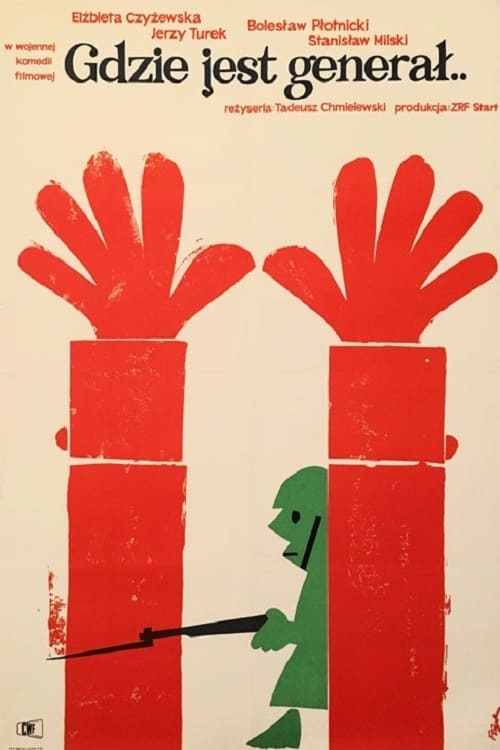
Where is the General?
1964
No user ratings available yet
Representation score: 5.0 out of 10

Representation Score
Minimal
1979
Director
Mykola Litus, Vitalii Shunko
Runtime
77 minutes
Average Rating
No ratings yetNew Showbiz Analysis
This 1979 Soviet war comedy operates within a strict framework of wartime heroism and state-sanctioned patriotism. The narrative focuses on a single male protagonist, Sgt. Tsybulya, whose journey through enemy territory highlights military ability to act and traditional masculine leadership. While the Soviet setting allows for a multi-ethnic cast reflecting the Red Army, the film uses these identities to bolster a unified national identity rather than exploring diverse cultural nuances. The production adheres to the social hierarchies and traditional gender roles typical of its era. Ultimately, the film serves as a period piece that reinforces established social norms. It lacks the depth or subversion of traditional roles found in more contemporary works.
Category Breakdown
The film does not show any non-binary or LGBTQ+ identities or same-sex relationships. The wartime comedy genre and the 1979 production date suggest a focus on traditional masculine roles.
The story centers around a male sergeant who navigates combat, reinforcing traditional gender roles where men take the lead and women have supporting roles.
The cast likely includes actors representing the multi-ethnic makeup of the Red Army. However, these identities are used to reinforce a unified Soviet identity rather than exploring specific ethnic backgrounds.
The story emphasizes patriotism and military duty over individual cultural exploration. It aligns with traditional values that prioritize institutional loyalty and the collective over individual differences.
There is no mention of characters with visible or invisible disabilities. The available information does not provide a basis for assessing representation in this category.
Present on Screen
Limited or Absent
Official Synopsis
On the way to Partisans camp Sgt. Tsybulya suddenly lands in the middle of German troops. Now he must find a way to return to the Red Army.
1964
1973
1970

1969
1984
1942
1962
1990
No reviews yet. Be the first to share your thoughts on this movie!
Use the rating form above to leave a star rating and optional review.