
Flatland
2007
No user ratings available yet
Diversity score: 5.7 out of 10
2008
Not RatedDirector
Marc Craste
Runtime
24 minutes
Average Rating
No ratings yetSynopsis
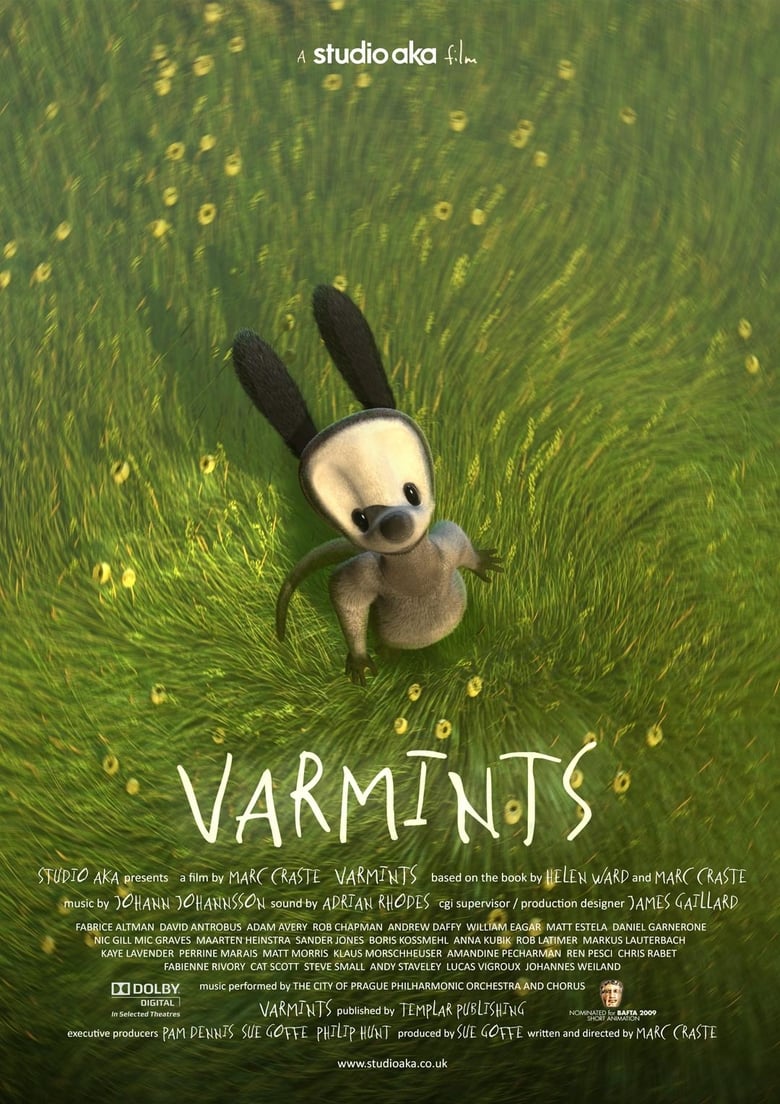
Adapted and directed by Marc Craste, Varmints is a 24-minute film based on the award-winning book of the same name by Helen Ward and illustrated by Craste, that tells the story of one small creature's struggle to preserve a world in danger of being lost forever through recklessness and indifference. A crew of 35 people worked in three countries over a two year period to make the film, and an original score by Icelandic composer Jóhann Jóhannsson and sound design by Adrian Rhodes complete the picture.
Overall Score
Fair
Category Breakdown
LGBTQ+ Representation
The film features anthropomorphic, non-human creatures without human gender markers or romantic subplots. Consequently, there is no explicit representation or critique of heteronormativity within the narrative.
Gender Representation
The narrative avoids traditional hierarchies by presenting the creatures as an undifferentiated collective. This approach disrupts conventional expectations of masculine leadership or feminine domesticity in favor of communal survival.
Racial & Ethnic Diversity
Non-human species serve as a metaphor for marginalized populations. The story depicts an organic community being displaced by industrial forces, mirroring the experiences of indigenous or colonized groups.
Religious & Cultural Diversity
The film offers a profound critique of industrial modernity and capitalist expansion. It frames technological progress as a destructive force that obliterates established ecosystems and traditional ways of life.
Disability Representation
The characters lack specific physical or neurodivergent traits. This prevents a measurable assessment of disability agency within the film's non-human cast.
Strengths
Areas for Improvement
AI Analysis
Varmints uses non-human subjects to explore complex systemic tensions and environmental themes. By stripping away human demographics, the film shifts the focus toward the struggle between organic communities and industrial expansion. The narrative architecture functions as a proxy for the experiences of marginalized and colonized groups. It challenges the traditional hierarchy of man over nature, framing technological encroachment as a systemic threat to communal stability. While the film lacks explicit human representation, its critique of globalized, capital-driven expansion provides a sophisticated layer of social commentary.
2007
2003
1976
2007
2017

2010

1984
2021
2017

2016
2010

1982
No reviews yet. Be the first to share your thoughts on this movie!
Use the rating form above to leave a star rating and optional review.