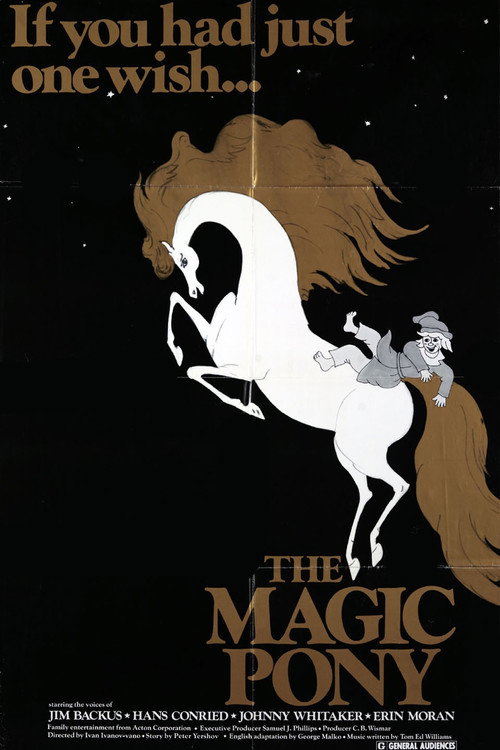
The Hunchedback Horse
1947
No user ratings available yet
Diversity score: 3.8 out of 10
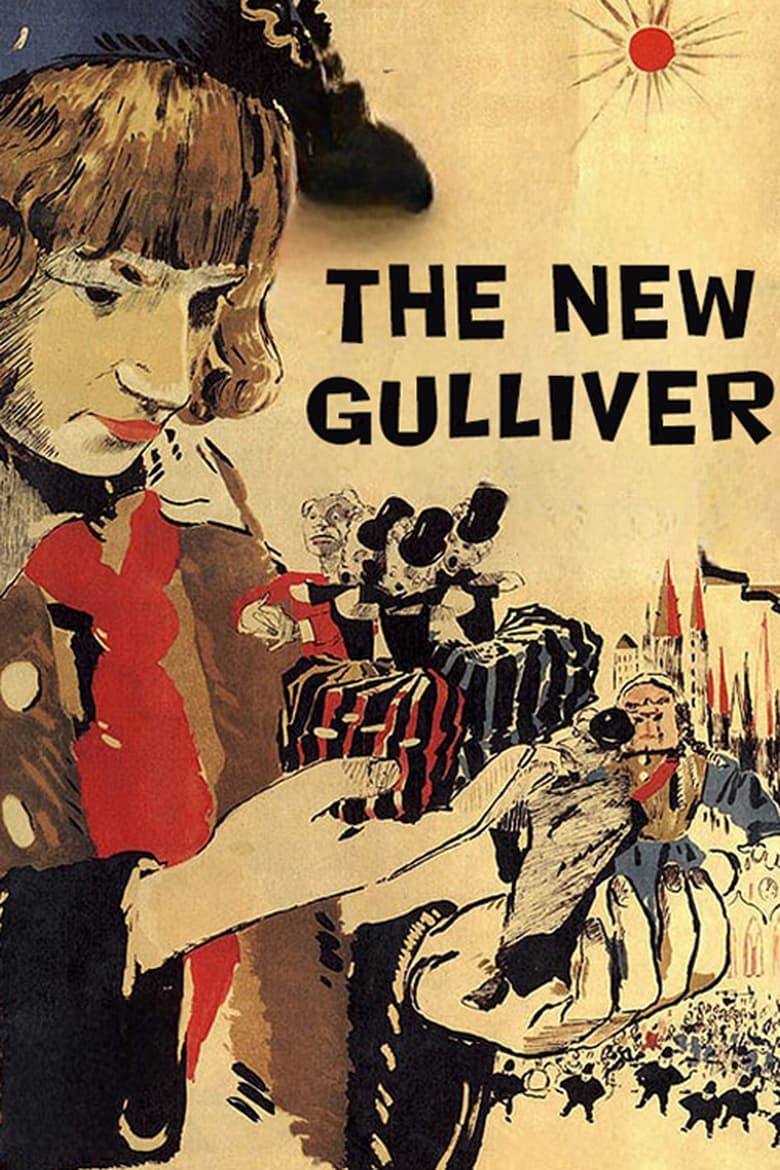
1935
Director
Aleksandr Ptushko
Runtime
75 minutes
Average Rating
No ratings yetSynopsis
Young boy dreams of himself as a version of Gulliver who has landed in Lilliput suffering under capitalist inequality and exploitation.
Overall Score
Fair
Category Breakdown
LGBTQ+ Representation
The film contains no LGBTQ+ characters or explorations of non-heteronormative identities. The narrative focuses entirely on scale-based interactions between the protagonist and Lilliput.
Gender Representation
Gender roles follow traditional 1930s hierarchies, centering on the male protagonist's physical presence. There is a notable lack of female agency or subversion of patriarchal structures.
Racial & Ethnic Diversity
The film lacks diverse casting or intentional intersectional characterization. While scale serves as a metaphor for 'otherness,' it does not translate into ethnic or racial plurality.
Religious & Cultural Diversity
The film excels by using satire to critique Western institutional frameworks and capitalist inequality. It reimagines the classic tale through a lens of systemic class-based oppression.
Disability Representation
No characters with physical or neurodivergent disabilities are portrayed with agency. The technical focus on miniature effects does not include meaningful disability representation.
Strengths
Areas for Improvement
AI Analysis
The New Gulliver is a film defined by its ideological mission rather than individual identity politics. It prioritizes a systemic critique of class and power, which elevates its cultural score while leaving modern identity metrics largely unaddressed. While the film succeeds in deconstructing institutionalized conflict and capitalist exploitation, it remains tethered to the social norms of its era. This results in a narrow focus on the male protagonist and a lack of diverse representation across gender and disability. Ultimately, the work functions as a socio-political allegory. It trades personal identity exploration for a broad, satirical examination of societal structures and bureaucratic absurdity.
No reviews yet. Be the first to share your thoughts on this movie!
Use the rating form above to leave a star rating and optional review.