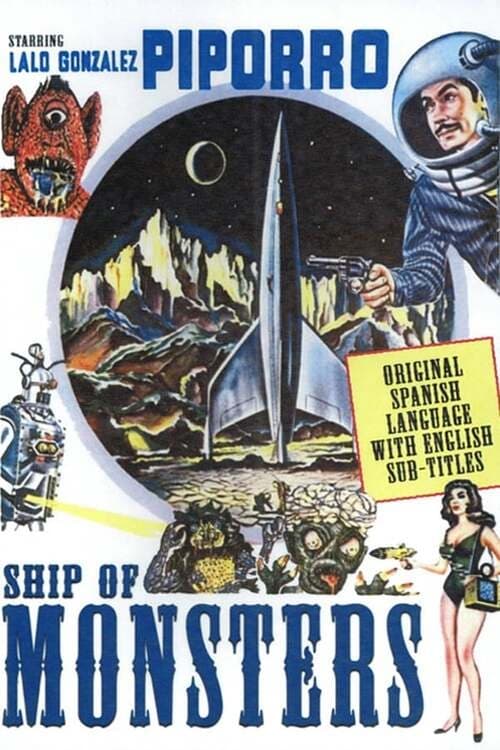
Ship of the Monsters
1960
No user ratings available yet
Representation score: 3.1 out of 10

Representation Score
Limited
1956
Director
Julián Soler
Runtime
95 minutes
Average Rating
No ratings yetNew Showbiz Analysis
The film operates as a conventional mid-century genre piece, prioritizing escapist comedy over social commentary. Its narrative structure relies heavily on established social norms and traditional character types. While the production offers a non-Western perspective by virtue of its Mexican origins, the internal character dynamics remain rooted in the era's standard romantic clichés. The central deception serves as a comedic engine rather than a vehicle for systemic disruption. Ultimately, the work lacks intentional multi-layered representation, functioning instead as a product of its time that adheres to the period's prevailing social hierarchies.
Category Breakdown
The story centers on a traditional romantic pairing between a man and his girlfriend. There is no indication of any non-binary or LGBTQ+ identities, nor does it critique the assumption that everyone is straight or cisgender.
The film features a standard romantic duo. While the couple plays a significant role in their Martian deception, the narrative follows the conventional gender dynamics typical of 1950s romantic comedies.
As a Mexican production, the film exists outside Anglo-Saxon cinematic dominance. However, the narrative appears to maintain the homogeneous social structures common in regional cinema of this era.
The plot focuses on lighthearted, escapist deception rather than social critique. It does not appear to challenge Western institutions, capitalism, or traditional family units.
The available information provides no evidence regarding the inclusion or depiction of characters with physical or neurodivergent disabilities.
Present on Screen
Limited or Absent
Official Synopsis
A guy and his girlfriend pretend to come from Mars.
1960

1979

1978

1981

1964

1964

1966

1953
No reviews yet. Be the first to share your thoughts on this movie!
Use the rating form above to leave a star rating and optional review.