Find another title
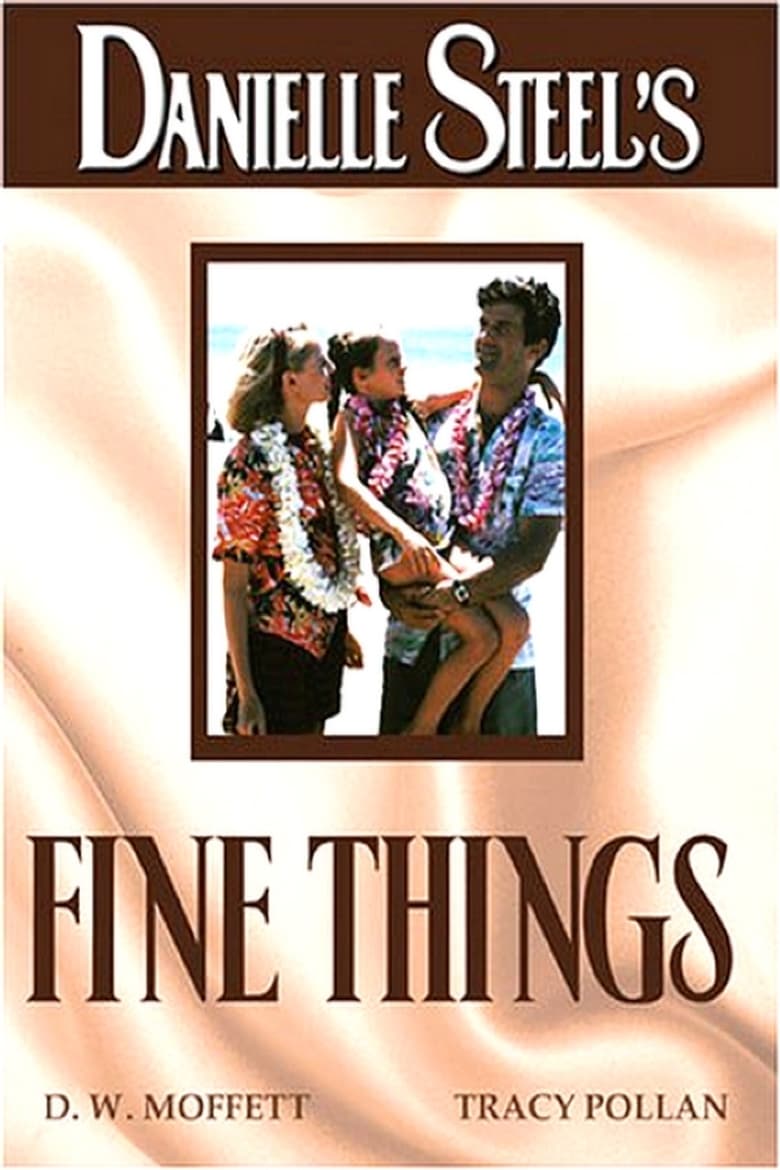
Fine Things
1990
Director
Tom Moore
Runtime
150 minutes
Average Rating
No ratings yetSynopsis
Bernard Fine's career leaves little time for romance, so fate takes over. When Bernie befriends a little girl, he meets - and falls for - her single mother, Liz. They soon marry and add a son to their new family. But the happiness is short-lived as Liz is fatally stricken by cancer. Added to the heartbreak is a threat from the past that could tear the family apart. For Bernie, it's a struggle to hold on to and savor the truly fine things in life.
Where to Watch
Diversity & Representation
Overall Score
Limited
Category Breakdown
LGBTQ+ Representation
The film follows a strictly heteronormative romantic arc between Bernard and Liz. It lacks any representation of non-cisnormative identities or critiques of traditional relationship structures.
Gender Representation
While Liz is a central figure, her character arc is largely defined by motherhood and her battle with illness. The story reinforces traditional domestic hierarchies and family formation.
Racial & Ethnic Diversity
The narrative focuses on a singular family unit without indicating a diverse or multicultural cast. It suggests a potentially homogeneous perspective typical of 1990s romance dramas.
Religious & Cultural Diversity
The story prioritizes traditional Western values and the sanctity of the nuclear family. It adheres to conventional moral frameworks regarding domestic stability and perseverance through tragedy.
Disability Representation
Liz’s cancer serves as a central dramatic catalyst for the plot. However, the illness appears to function more as an emotional device for the protagonist than a study of agency.
Strengths
- The film provides a focused emotional study of a central family unit navigating significant life transitions.
- It utilizes a clear, traditional dramatic structure that explores themes of love, family, and perseverance.
Areas for Improvement
- The narrative lacks representation of LGBTQ+ identities or non-cisnormative perspectives.
- The story relies on conventional gender roles and traditional domestic hierarchies.
- The depiction of illness functions more as a plot device than a nuanced exploration of disability agency.
- There is a lack of visible racial or multicultural diversity within the cast and setting.
AI Analysis
Fine Things is a conventional 1990s television drama that relies heavily on established sentimental tropes. The narrative centers on a traditional nuclear family, following a predictable trajectory from courtship to marriage and eventual tragedy. The film lacks significant diversity, focusing instead on a heteronormative romantic arc and Western domestic values. It offers little disruption to social hierarchies, adhering to the standard dramatic structures of its era. While the story addresses serious themes like terminal illness, these elements serve primarily to drive the emotional growth of the male protagonist rather than exploring broader identity-based perspectives.
Rate this Movie
Reviews
No reviews yet. Be the first to share your thoughts on this movie!
Use the rating form above to leave a star rating and optional review.