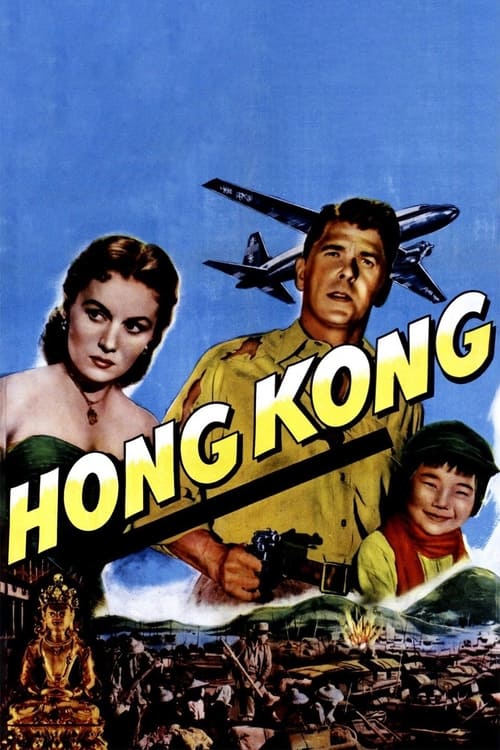
Hong Kong
1952
No user ratings available yet
Diversity score: 2.6 out of 10

1947
NRDirector
William H. Pine
Runtime
73 minutes
Average Rating
No ratings yetSynopsis
A nurse is taking an amnesia victim, who was imprisoned by the Japanese during WW II, to the United States in a plane piloted by Richard Denning. The passengers include a Japanese colonel on his way to Manila to face war-crime charges, and a couple who were married on the day they were liberated from a Japanese prison camp. During the flight, the colonel breaks away from his guards, causes the plane to go out of control, and it crashes into the sea. The survivors get into a rubber boat and go through a minor-league version of "Lifeboat, with no Alfred Hitchcock sightings, until Air-Sea Rescue pilot Jim Willis rides to the rescue.
Overall Score
Limited
Category Breakdown
LGBTQ+ Representation
The film lacks LGBTQ+ characters or narratives that critique heteronormativity. It remains a traditional wartime survival drama without queer representation.
Gender Representation
A female nurse provides some agency in the survival scenario. However, the central conflict is driven by male characters, reinforcing traditional gender roles.
Racial & Ethnic Diversity
The inclusion of a Japanese colonel introduces ethnic variety and racial tension. This representation is tied to post-war geopolitical conflict rather than nuanced character depth.
Religious & Cultural Diversity
The story adheres to mid-century Western moral frameworks and institutional order. It reinforces traditional values regarding international law and justice.
Disability Representation
Amnesia serves as a central plot device for one character. This condition is used primarily as a catalyst for mystery and vulnerability.
Strengths
Areas for Improvement
AI Analysis
Seven Were Saved is a product of its 1947 era, prioritizing wartime tension and survival tropes over social complexity. While it includes diverse ethnic elements, they are largely functional tools for driving conflict related to post-WWII justice. The film relies on established hierarchies, with male characters driving the primary action and female characters occupying caregiver roles. Diversity is present but lacks intersectional depth or a challenge to the status quo. Ultimately, the narrative reinforces Western institutional values and traditional social structures rather than exploring nuanced identities.
1952
1940
1957
1954
1949
No reviews yet. Be the first to share your thoughts on this movie!
Use the rating form above to leave a star rating and optional review.