Kidnap Capital
2016
No user ratings available yet
Diversity score: 6.9 out of 10
2024
Director
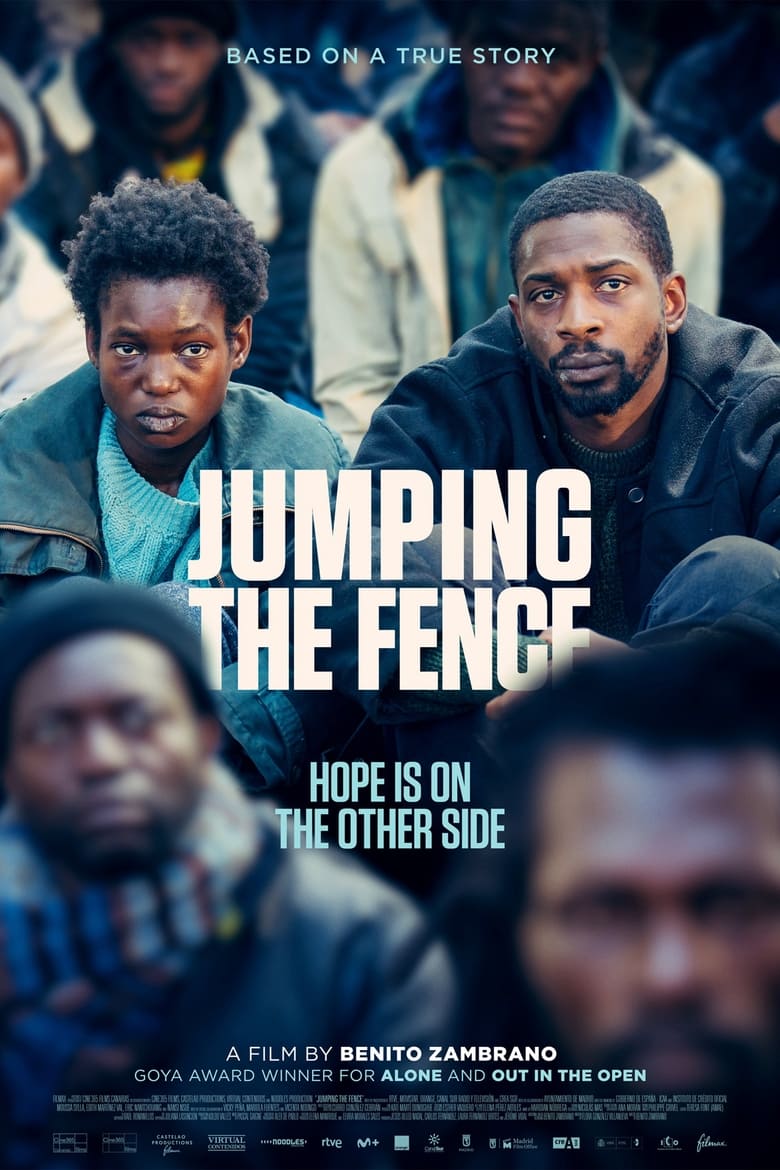
Benito Zambrano
Runtime
85 minutes
Average Rating
No ratings yetSynopsis
Ibrahim came to Spain from Guinea Conakry and now his roots are in Madrid, where he lives with Mariama and works as a bricklayer. One day, the police arrest him and Ibrahim, who lacks a residence permit, is deported to his country. From that moment on, his only objective will be to return to Spain to reunite with Mariama and her daughter about to be born. After managing to cross Africa, he settles with some companions in Mount Gurugú, an immigrant camp that separates Africa from Europe. There he meets Aminata, a girl determined to jump the fence and reach Spain. But that is a physical feat that is not within everyone's reach.
Overall Score
Good
Category Breakdown
LGBTQ+ Representation
The story focuses on heteronormative family structures involving Ibrahim, Mariama, and their unborn child. There is a lack of overt queer subversion or non-cisnormative character arcs in the primary plot.
Gender Representation
The film disrupts traditional hierarchies by centering the resilience of Mariama and the agency of Aminata. Aminata is portrayed as a determined character rather than a passive victim of her circumstances.
Racial & Ethnic Diversity
The film provides exceptional representation by centering a West African protagonist within a European setting. It shifts the perspective away from the Western gaze to prioritize the agency of African migrants.
Religious & Cultural Diversity
The narrative critiques geopolitical borders and state mechanisms like deportation as destabilizing forces. It portrays the struggle for survival in immigrant camps as a response to institutionalized exclusion.
Disability Representation
There are no visible or mentioned depictions of physical or neurodivergent disabilities within the narrative.
Strengths
Areas for Improvement
AI Analysis
Jumping the Fence is a powerful exploration of the human cost of geopolitical boundaries. By centering a West African protagonist, the film successfully de-centers Eurocentric norms and prioritizes the lived experiences of migrants. The narrative architecture is strongest in its racial and cultural critiques, framing state enforcement as a disruptive force. It moves beyond simple tropes to highlight the systemic friction faced by those outside legal structures. While the film excels in racial representation, it remains within traditional heteronormative frameworks. The focus on familial structures and the lack of queer identities limits its scope in terms of LGBTQ+ diversity.
2016
2025

2014

2008

2020
2023

2014

2017
No reviews yet. Be the first to share your thoughts on this movie!
Use the rating form above to leave a star rating and optional review.