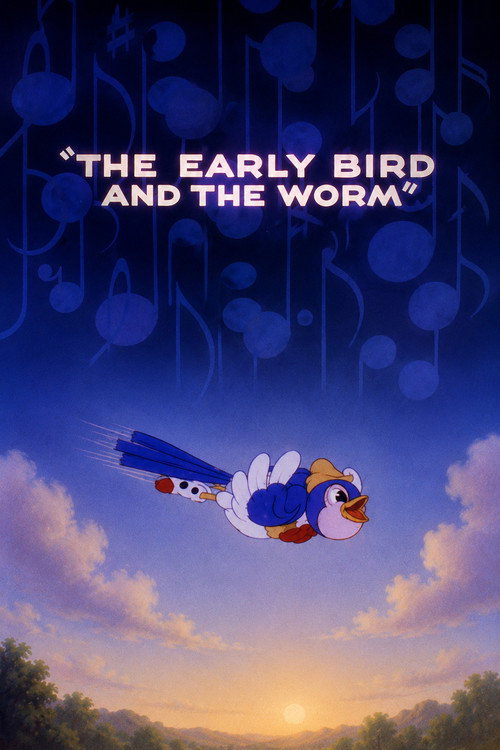
The Early Bird and the Worm
1936
No user ratings available yet
Representation score: 1.1 out of 10
Representation Score
Minimal
1932
Director
Rudolf Ising
Runtime
7 minutes
Average Rating
No ratings yetNew Showbiz Analysis
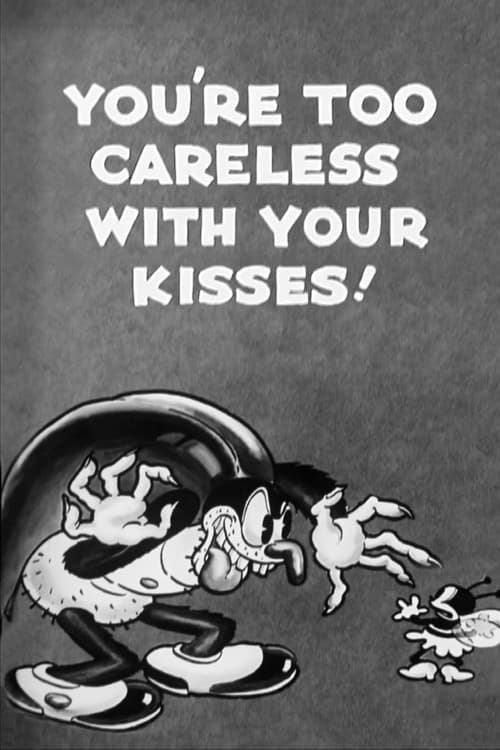
This 1932 short film operates within the conventional storytelling boundaries of early American animation. It uses standard slapstick and anthropomorphic clichés to deliver a consequence-driven narrative centered on domestic instability. The film reinforces traditional social hierarchies and moral causality rather than challenging them. The plot relies on established gendered clichés and a cautionary moral framework typical of the era. Ultimately, the work lacks the intentionality needed to provide meaningful characters who reflect more than one aspect of diversity or to disrupt the social norms of its time.
Category Breakdown
The film focuses on a traditional marriage between a husband and wife. It does not include non-cisgender identities or narratives that challenge traditional norms.
Gender roles in the film follow traditional 1930s stereotypes, where the wife's character is defined by her relationship to her husband. The plot depends on the wife's vulnerability to create tension.
As an animated film featuring insect characters, the film lacks human racial or ethnic identifiers. It does not feature diverse casting or intentional racial diversity.
The story serves as a cautionary tale emphasizing personal responsibility and family stability. It adheres to a traditional moral framework without offering secular or anti-Western critiques.
There are no characters with physical or neurodivergent disabilities in the film. No characters with disabilities are given a significant role in the plot.
Present on Screen
Limited or Absent
Official Synopsis
A bee returns home late after a night out having too much honey. His wife leaves him, but quickly ends up in the clutches of an evil large predator.
1936
1943
1942
1936
1940
1932
1936
1937
No reviews yet. Be the first to share your thoughts on this movie!
Use the rating form above to leave a star rating and optional review.