Find another title
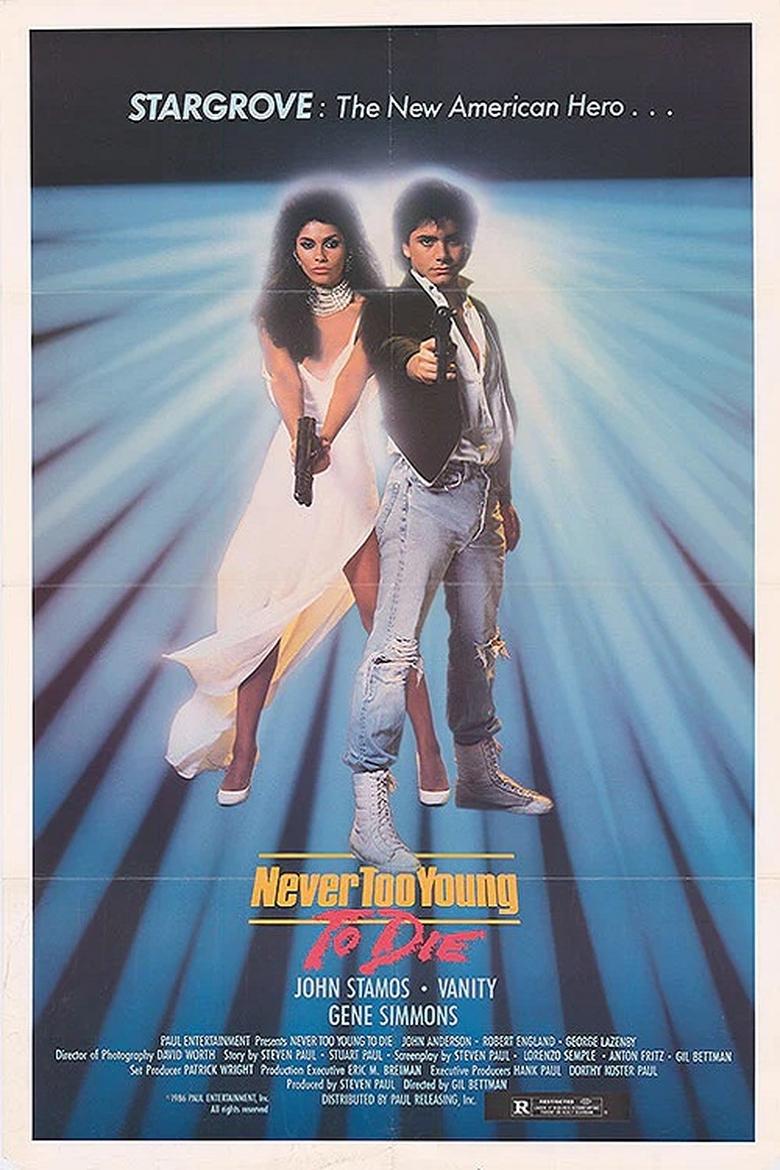
Never Too Young to Die
1986
RDirector
Gil Bettman
Runtime
92 minutes
Average Rating
No ratings yetSynopsis
Secret agent Drew Stargrove is brutally murdered by the ruthless hermaphrodite gang leader Velvet Von Ragnar. The murdered secret agent's son, Lance Stargrove is thrust into the dangerous and intriguing world of secret agents and espionage when he seeks revenge. Danja Deerling teams up with Lance as his sidekick and love interest.
Where to Watch
Diversity & Representation
Overall Score
Limited
Category Breakdown
LGBTQ+ Representation
The film features Velvet Von Ragnar, a hermaphrodite gang leader, as the antagonist. This characterization functions as a trope of the 'othered' villain rather than a nuanced exploration of identity.
Gender Representation
The story follows a traditional hero's journey centered on Lance Stargrove. Danja Deerling serves primarily as a sidekick and love interest, reinforcing conventional gendered roles.
Racial & Ethnic Diversity
The cast appears largely homogeneous and lacks significant racial or ethnic intersectionality. The character archetypes reflect a conventional, Western-centric demographic.
Religious & Cultural Diversity
The film operates within a standard Western framework without critiquing institutions like capitalism or religion. It utilizes these as a default backdrop for a binary struggle between good and evil.
Disability Representation
There is no evidence of characters with visible or invisible disabilities. No such characters are utilized as plot devices within the narrative.
Strengths
- Features an unconventional antagonist in Velvet Von Ragnar, providing a departure from standard villain archetypes.
Areas for Improvement
- Lacks racial and ethnic diversity, presenting a largely homogeneous cast.
- Reinforces traditional gender hierarchies by positioning female characters in secondary roles.
- Fails to provide nuanced or respectful depictions of non-cisnormative identities.
- Relies on a Western-centric cultural framework without exploring diverse perspectives.
AI Analysis
Never Too Young to Die is a conventional 1980s action-adventure film that prioritizes genre tropes over social disruption. The narrative architecture relies on established archetypes, such as the male hero and the 'othered' villain, to drive the plot. The film lacks intentionality regarding intersectional representation. While it includes an unconventional antagonist, the characterization serves to reinforce traditional cinematic tropes rather than provide a nuanced or progressive depiction of non-cisnormative identity. Ultimately, the production reflects the demographic and moral frameworks of its era, favoring a Western-centric perspective and a binary moral structure that avoids challenging systemic social hierarchies.
Rate this Movie
Reviews
No reviews yet. Be the first to share your thoughts on this movie!
Use the rating form above to leave a star rating and optional review.