Access All Areas
2017
No user ratings available yet
Representation score: 5.1 out of 10
Representation Score
Fair
2003
Director
Benjamin Quabeck
Runtime
97 minutes
Average Rating
No ratings yetNew Showbiz Analysis
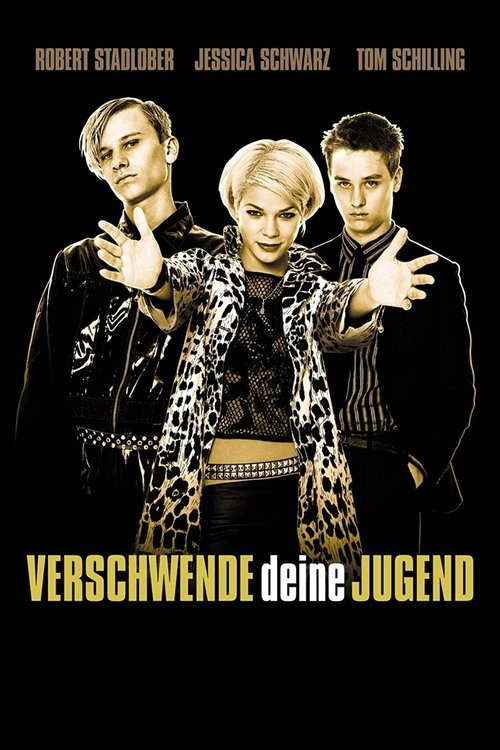
Wasted Youth functions primarily as a period-specific study of subcultural rebellion. It succeeds in deconstructing mid-century social rigidities by pitting individualistic expression against institutional expectations, specifically through the lens of the German New Wave. However, the film lacks explicit depth in reflecting multiple aspects of identity. While the setting invites a critique of assumptions that everyone is straight or cisgender, the narrative does not provide specific identity-driven plot points or diverse casting. The focus remains on the tension between stable careerism and the precarious life of an artist, making it a study of social alienation rather than a broad exploration of diverse identities.
Category Breakdown
The film explores the 1981 German New Wave scene, which was historically linked to queer subcultures. However, the narrative lacks explicit details about same-sex relationships or non-traditional gender identities.
The story centers on Harry's struggle between a traditional banking career and the music scene. This provides a moderate challenge to conventional professional hierarchies and provider roles.
Set in 1981 Germany, the film likely reflects the demographic homogeneity of that era. It focuses more on subcultural outsiders than on racial diversity.
The narrative critiques traditional Western institutions by prioritizing artistic rebellion over capitalist stability. It centers on the rejection of structured, institutionalized vocational paths.
There is no evidence of characters with physical or neurodivergent disabilities within the provided narrative context.
Present on Screen
Limited or Absent
Official Synopsis
The year is 1981, the German New Wave is at the peak. Harry, otherwise Sparkasse trainee, wants to make it big as a manager of the band of his friends, Apollo Schwabing. He has booked the band as the opening act for a concert where the group DAF are the headliners.
2017
2008
2003
1998
2011
2014
2002
2020
No reviews yet. Be the first to share your thoughts on this movie!
Use the rating form above to leave a star rating and optional review.