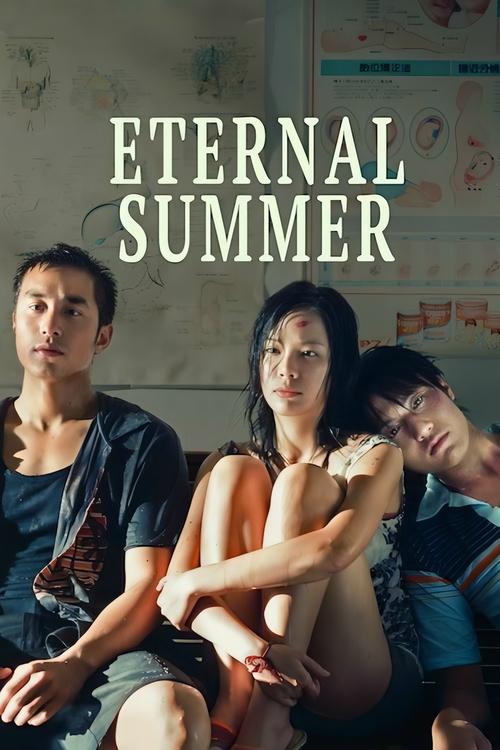
Eternal Summer
2006
No user ratings available yet
Representation score: 6.6 out of 10

Representation Score
Excellent
2009
Director
Lee Chi-yuarn
Runtime
98 minutes
Average Rating
No ratings yetNew Showbiz Analysis
Beautiful Crazy disrupts coming-of-age clichés by prioritizing women's ability to drive the story and emotional realism. The film focuses on the messy, subjective experiences of its protagonists, moving away from moralistic instruction. By presenting male characters as figures of instability, it creates a narrative space where female characters drive the plot through their autonomy and social maneuvers. The production provides a valuable non-Western perspective, challenging idealized patriarchal structures and Western storytelling norms through its localized Taiwanese context.
Category Breakdown
The film explores the fluid and chaotic nature of adolescent attraction without explicitly depicting queer identities. The focus on emotional turmoil suggests a departure from rigid heterosexual norms.
The narrative centers on female characters' ability to act and internal conflicts. Male figures are portrayed as sources of instability or dysfunction, subverting traditional gender hierarchies.
As a Taiwanese production, the film offers a localized East Asian perspective. It avoids a white-centric lens, providing a meaningful alternative to Western storytelling structures.
The film critiques traditional family structures by depicting a dysfunctional, alcoholic father. It treats adolescent rebellion as a necessary part of identity formation rather than a moral failing.
Mental health and neuro-emotional struggles are present through the father's depression and alcoholism. However, these elements serve more as metaphors for instability than nuanced portrayals of disability.
Present on Screen
Limited or Absent
Official Synopsis
What is youth all about? Before they could figure out what was happening, Xiao-Bu finds herself in a cat fight with Angel over a cigarette, Ah-Mi sleeps with Xiao-Bu’s boxer boyfriend, and Angel kisses Xiao-Bu. What could be worse? Imagine living with an alcoholic father who chose nothing in life but to stare out of a window. Picture the embarrassment if bird droppings stained your clothes just as you were asking someone out on a date. All three girls fall in love, feel hurt, forget and have experiences that are as random as 17 year-old Xiao-Bu’s coin toss which decides her future relationship with Angel.
2006

2011

2015

2007

2012
2001
2019

2005
No reviews yet. Be the first to share your thoughts on this movie!
Use the rating form above to leave a star rating and optional review.