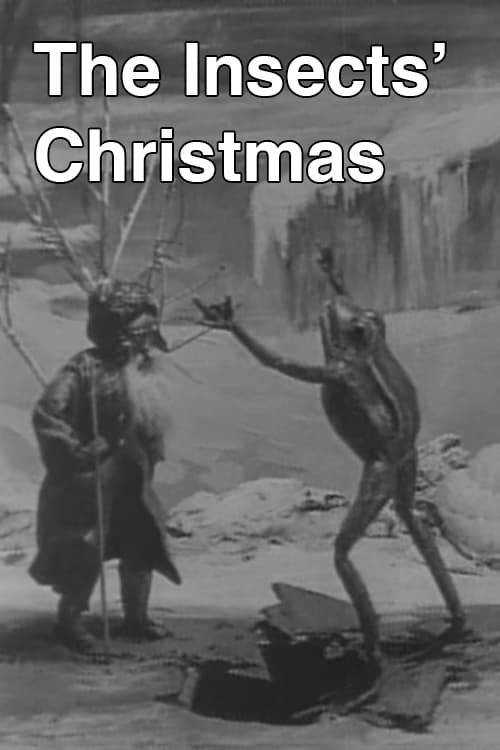
The Insects' Christmas
1913
No user ratings available yet
Diversity score: 5.2 out of 10
No Poster Available
1915
Director
Władysław Starewicz
Runtime
15 minutes
Average Rating
No ratings yetSynopsis
When a young girl finds a beautiful dead lily in the woods, she asks her grandfather to tell her about it. The lily stands in splendour beside a stream, admired by the creatures of the woods. But an army of beetles, bent on conquering new territories, wants to cross the stream - and the lily is blocking their way. An unashamed allegory of the German rape of Belgium.
Overall Score
Fair
Category Breakdown
LGBTQ+ Representation
The film lacks explicit depictions of LGBTQ+ identities or non-heteronormative relationships. The narrative focuses on an allegorical conflict between nature and an invading force.
Gender Representation
A young girl serves as the story's catalyst, using her curiosity to bridge the audience and the allegory. While she possesses agency as a seeker of knowledge, she lacks a fully developed character arc.
Racial & Ethnic Diversity
By using insects as allegorical stand-ins for human nations, the film employs narrative abstraction. This technique sidesteps the era's restrictive racial hierarchies through symbolic proxies.
Religious & Cultural Diversity
The film provides a profound critique of Western imperialist aggression. It deconstructs the morality of state-sponsored violence by framing the German invasion of Belgium through a metaphorical lens.
Disability Representation
There is no evidence regarding the depiction of physical or neurodivergent disabilities within the narrative.
Strengths
Areas for Improvement
AI Analysis
Władysław Starewicz utilizes stop-motion animation to transform a simple natural scene into a complex socio-political critique. By using entomological subjects, the film bypasses traditional human casting to explore themes of sovereignty and aggression. The work succeeds in using high-concept allegory to challenge the morality of territorial conquest. It prioritizes the preservation of beauty over the destructive nature of expansionist militarism. However, the film's reliance on non-human proxies and a brief introductory character limits direct demographic representation. The narrative architecture is built more on systemic violation than on individual character development.
No reviews yet. Be the first to share your thoughts on this movie!
Use the rating form above to leave a star rating and optional review.