Find another title
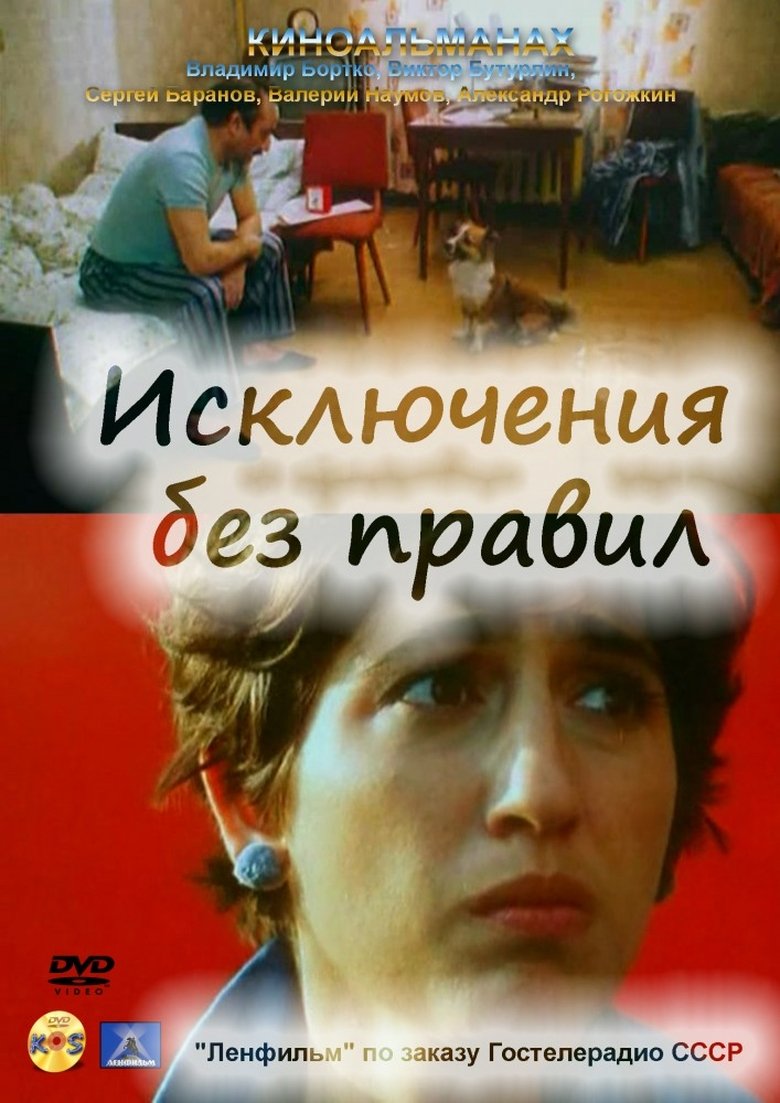
Exceptions Without Rules
1986
Director
Sergey Baranov, Vladimir Bortko, Viktor Buturlin, Valeri Naumov, Aleksandr Rogozhkin
Runtime
95 minutes
Average Rating
No ratings yetSynopsis
An almanac of short feature films based on stories by Mikhail Mishin from the collection of short stories "Pause in a Major".
Where to Watch
Diversity & Representation
Overall Score
Limited
Category Breakdown
LGBTQ+ Representation
The anthology lacks explicit queer narratives or non-heteronormative identities. While the title hints at social outliers, there are no visible intentional LGBTQ+ character arcs.
Gender Representation
Representation follows traditional 1980s Soviet dramatic frameworks. The film relies on standard period archetypes without actively deconstructing masculinity or femininity.
Racial & Ethnic Diversity
The casting reflects a relatively homogeneous Soviet social landscape. The narrative does not utilize diverse ethnic casting or race-bending as a thematic device.
Religious & Cultural Diversity
The film explores complex cultural values through situational ethics. It examines the tension between individual impulses and the expectations of a structured society.
Disability Representation
There is no discernible evidence regarding the portrayal of physical or neurodivergent disabilities within the film's vignettes.
Strengths
- Engages with complex themes of subjective morality and situational ethics.
- Provides nuanced character studies through its episodic, vignette-based format.
Areas for Improvement
- Lacks explicit representation of LGBTQ+ identities or queer narratives.
- Relies on traditional gender archetypes rather than subverting social hierarchies.
- Reflects a homogeneous demographic that lacks racial and ethnic diversity.
AI Analysis
Exceptions Without Rules functions as a literary almanac of character studies rather than a cohesive narrative. It prioritizes human eccentricity and social deviations over progressive representation. The film is deeply rooted in its specific historical and cultural era, which limits its demographic breadth. It focuses on the nuances of individual behavior within a structured Soviet milieu. Ultimately, the work serves as a study of morality and social outliers. It lacks the intersectional frameworks or systemic critiques necessary to disrupt traditional social hierarchies.
Rate this Movie
Reviews
No reviews yet. Be the first to share your thoughts on this movie!
Use the rating form above to leave a star rating and optional review.