The Destinations of Doctor Who
2012
No user ratings available yet
Representation score: 3.8 out of 10
Representation Score
Fair
2013
Director
Ashley Way, Steve Smith
Runtime
60 minutes
Average Rating
No ratings yetNew Showbiz Analysis
The Science of Doctor Who serves as an educational tool rather than a narrative exploration of identity. It prioritizes the dissemination of scientific theory through a traditional academic lens, using science fiction to bridge the gap between science and physics. While the production avoids restrictive religious morality by favoring secular discourse, it does not actively center underrepresented identities. The work functions as a standard example of high-level science communication within a conventional institutional setting. Ultimately, the program's focus on intellectual exploration means it lacks the narrative structure needed to address social hierarchies or diverse identity-driven storytelling.
Category Breakdown
The program focuses on theoretical physics and science fiction rather than social identity. There are no explicit LGBTQ+ character arcs or narratives present.
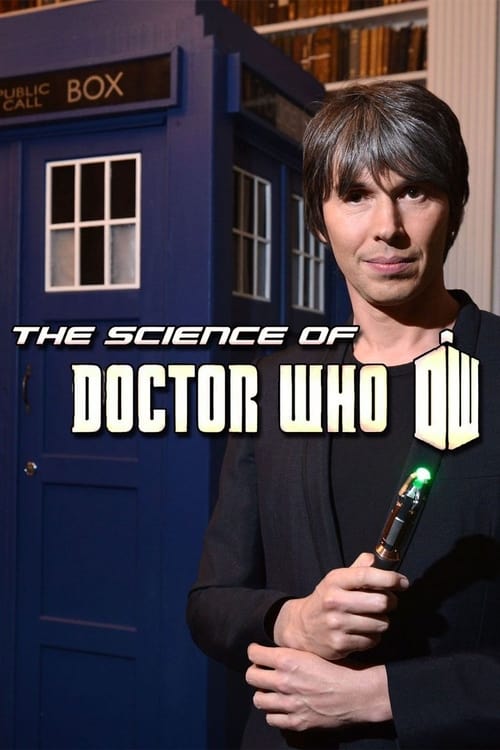
Intellectual authority is centered on Professor Brian Cox. While celebrity guests are present, the discussion is primarily led by a male academic.
The setting is a prestigious Western institution. While the public audience suggests some demographic variety, there is no evidence of intentional racial diversity in the cast.
The film promotes secularism by using science fiction to explore existential questions. It prioritizes empirical knowledge over religious dogma within a Western scientific tradition.
The lecture format provides no specific information regarding the depiction of physical disabilities or neurodivergence.
Present on Screen
Limited or Absent
Official Synopsis
For one night only, Professor Brian Cox takes an audience of celebrity guests and members of the public on a journey into the wonderful universe of the Doctor, from the lecture hall of the Royal Institution of Great Britain. Drawing on the latest theories as well as 200 years of scientific discoveries and the genius of Einstein, Brian tries to answer the classic questions raised by the Doctor. Can you really travel in time? Does extra-terrestrial life exist in our galaxy? And how do you build something as fantastical as the TARDIS?
2012
2022
2013
2012
2006
1994

2001

2019
No reviews yet. Be the first to share your thoughts on this movie!
Use the rating form above to leave a star rating and optional review.